Children's, Magical

Silent Lee & the Adventure of the Side Door Key by Alex Hiam


silent leeA student of the Girls’ Academy of Latin and Alchemy, Silent Lee travels between modern day Boston and the brimming-with-alchemy Boston of 100 years ago as she goes about her school day. How does she do that, you ask? Why, through a magical secret door on the side of her house where she lives with her Great Aunt Generous. Front of the house = modern day Boston; side of the house = old Boston.

Sie goes about her business undisturbed until the day she’s told Aunt Gen has died and she’s going to move in with some cousins. Picked up by her mysterious mother, who may or may not be a spy, Sie is perplexed by her mother’s interest in the side door key and makes the decision to keep it hidden. As Sie settles in at the cousins’ house, mysterious things start to happen which lead her to believe that Aunt Gen may not be dead after all. What follows is a fast-paced adventure as Sie rushes to find her Aunt Gen and return to her studies.

Alex Hiam has begun a fascinating, fun, and original new series for middle grade readers featuring a smart and sassy 15 year old protagonist who is sure to appeal. The time travel and school of magic concepts aren’t new, but Hiam breathes fresh life into them here with the Girls’ Academy. Sie’s relationship with her mother adds needed tension to the story, and her relationship with Aunt Gen is one we all wish for. I look forward to sharing more adventures with Silent Lee and the Girls’ Academy students.

Books About Books, Non Fiction

For the Love of Books by Graham Tarrant


cover160804-mediumPeople who love books and reading and authors will enjoy this book. It’s like a compilation of People magazine stories, but focusing solely on authors. There is information galore on famous feuds, who drank what and when, how and where certain authors liked to write, muses and obsessions, and just plain gossip. However, buried under the 21st century, short attention span sections is some real, solid information about authors, writing, and reading. This would be an interesting companion text in a World Literature course – teach the serious stuff but temper it with the messy, human side of the authors. Recommended for people who enjoy trivia and unusual takes on traditional literature and authors.

Publication Date: June 4, 2019
Published By: Skyhorse Publishing
Thanks to NetGalley for the review copy

Partners In Crime

The Naming Game by Gabriel Valjan


the-naming-game-by-gabriel-valjan-cover

On Tour April 22 – June 22, 2019

Whether it’s Hollywood or DC, life and death, success or failure hinge on saying a name.

The right name.

When Hollywood script-fixer Charlie Loew is found murdered in a seedy flophouse with a cryptic list inside his handkerchief, Jack Marshall sends Walker undercover as a screenwriter at a major studio and Leslie as a secretary to Dr. Phillip Ernest, shrink to the stars. J. Edgar Hoover has his own list. Blacklisted writers and studio politics. Ruthless gangsters and Chief Parker’s LAPD. Paranoia, suspicions, and divided loyalties begin to blur when the House Un-American Activities Committee insists that everyone play the naming game. 

Praise for The Naming Game:

“With crackling dialogue and a page turning plot shot-through with authentic period detail, Gabriel Valjan pulls the reader into the hidden world of the 1950’s Hollywood studio scene, involving murder, McCarthyism and mayhem.”
~ James L’Etoile, author of At What Cost and Bury the Past

“Terrific historical noir as Gabriel Valjan takes us on a trip through post-war Hollywood involving scandal, McCarthyism, blacklisting, J. Edgar Hoover and, of course, murder. Compelling story, compelling characters – and all the famous name dropping is great fun. Highly recommended!”
~ R.G. Belsky, author of the Clare Carlson Mystery Series

“Brilliantly written, Gabriel Valjan’s The Naming Game whisks the reader back in time to postwar Los Angeles. Spies, Communism, and Hollywood converge in a first-rate thriller.”
~ Bruce Robert Coffin, Agatha Award nominated author of Beyond the Truth

Book Details:

Genre: Historical Mystery, Crime Fiction
Published by: Winter Goose Publishing
Publication Date: May 4, 2019
Number of Pages: 210
ISBN: 978-1-941058-86-2
Series: The Company Files: 2
Purchase Links: Amazon | Goodreads


Read an excerpt:

At seven minutes past the hour while reviewing the classified documents at his desk, one of the two colored phones, the beige one, rang. He placed the receiver next to his ear, closed the folder, and waited for the caller’s voice to speak first.

“Is this Jack Marshall?”

“It is.”

“This is William Parker. Is the line secure?”

“It is,” Jack replied, his hand opening a desk cabinet and flipping the ON switch to start recording the conversation.

“I don’t know you Mr. Marshall and I presume you don’t know me.”

A pause.

“I know of you, Chief Parker.”

“Were you expecting my call?”

“No and it doesn’t matter.” Jack lied.

“Fact of the matter, Mr. Marshall, is an individual, whom I need not name, has suggested I contact you about a sensitive matter. He said matter of security so I listened.”

“Of course. I’m listening.”

“I was instructed to give you an address and have my man at the scene allow you to do whatever it is that you need to do when you arrive there.”

“Pencil and paper are ready. The address, please.”

Jack wrote out the address; it was in town, low rent section with the usual rooming houses, cheap bars, about a fifteen-minute drive on Highway 1 without traffic.

“Ask for Detective Brown. You won’t miss him. Don’t like it that someone steps in and tells me how to mind my own city, but I have no choice in the matter.”

Jack ignored the man’s defensive tone. He knew Detective Brown was a dummy name, like Jones or Smith on a hotel ledger. Plain, unimaginative, but it would do. Most policemen, he conceded, were neither bright nor fully screwed into the socket. A chief was no different except he had more current in him. The chief of police who ruled Los Angeles by day with his cop-syndicate the way Mickey Cohen owned the night must’ve swallowed his pride when he dropped that nickel to make this call.

“Thank you, Chief Parker.”

Jack hung up and flipped the switch to OFF.

Whatever it was at the scene waiting for Jack was sufficient cause to pull back a man like Bill Parker and his boys for twelve hours. Whoever gave this order had enough juice to rein in the LAPD.

Jack took the folder he was reviewing and walked it across the room. He opened the folder once more and reread the phrases ‘malicious international spy’ and, in Ronald Reagan’s own choice of words, ‘Asia’s Mata Hari’, before closing the cover and placing it inside the safe. His review will have to wait. He put on his holster and grabbed a jacket.

Betty came out on the porch as he was putting the key into the car door.

“I won’t be long. Please kiss the children good night for me.”

“Can’t this wait, Jack? The children were expecting you to read to them tonight. Jack Junior set aside the book and you know Elizabeth will be crushed.”

“It can’t wait. I’m sorry. Tell them I’ll make it up to them.”

“You need to look them in the face when you tell them sorry.”

He opened the door as his decision. She understood she dealt him the low card. “Want something for the road?”

“No thanks. I’ll see you soon.”

He closed the door with finesse. He couldn’t help it if the children heard the car. He checked the mirror and saw her on the porch, still standing there, still disappointed and patient, as he drove off.

Detective Brown, sole man on the scene, walked him over to the body without introducing himself. Jack didn’t give his name.

At six-fifteen the vet renting a room down the hall discovered the body. Detective Brown said the veteran was probably a hired hound doing a bag job – break-ins, surveillance, and the like. Recent veterans made the best candidates for that kind of work for Hoover, Jack thought. Worked cheap and they went the extra mile without Hoover’s agents having to worry about technicalities like a citizen’s rights going to law.

“What makes you think he was hired out?” Jack asked.

Brown, a man of few words, handed Jack his notebook, flipped over to the open page he marked Witness Statement and said politely, “Please read it. Words and writing are from the witness himself.”

“The man was a no good ‘commonist’.”

“Nice spelling. A suspect?”

“No, sir. The coroner places the death around early afternoon, about 2ish. Our patriot was across the street drinking his lunch. I verified it.”

Jack viewed the body. The man was fully dressed wearing a light weave gabardine suit costing at least twenty-five. The hardly scuffed oxfords had to cost as much as the suit, and the shirt and tie, both silk, put the entire ensemble near a hundred. Hardly class consciousness for an alleged Communist, Jack thought.

The corpse lying on his side reminded Jack of the children sleeping, minus the red pool seeping into the rug under the right ear. The dead man wore a small sapphire ring on his small finger, left hand. No wedding band. Nice watch on the wrist, face turned in. An odd way to read time. Breast pocket contained a cigarette case with expensive cigarettes, Egyptian. Jack recognized the brand from his work in the Far East. Ten cents a cigarette is nice discretionary income. Wallet in other breast pocket held fifty dollars, various denominations. Ruled out robbery or staging it. Identification card said Charles Loew, Warner Brothers. Another card: Screen Writers Guild, signed by Mary McCall, Jr. President. Back of card presented a pencil scrawl.

“Find a lighter or book of matches?”

Detective Brown shook his head. Jack patted the breast pockets again and the man’s jacket’s side-pockets. Some loose change, but nothing else. The man was unarmed, except for a nice pen. Much as he disliked the idea Jack put his hands into the man’s front pockets. Nothing. He found a book of matches in the left rear pocket, black with gold telltale lettering, Trocadero on Sunset. Jack flipped the matchbook open and as he suspected, found a telephone number written in silver ink; different ink than the man’s own pen. Other back pocket contained a handkerchief square Jack found interesting, as did Detective Brown.

“What’s that?” he asked, head peering over for a better look.

“Not sure,” answered Jack, unfolding the several-times folded piece of paper hidden inside the hanky. The unfolded paper revealed a bunch of typewritten names that had bled out onto other parts of the paper. It must have been folded while the ink was still wet. It didn’t help someone spilt something on the paper. Smelled faintly of recent whiskey. Jack reviewed what he thought were names when he realized the letters were nonsense words.

“Might be a Commie membership list. Looks like code.” But Brown zipped it when Jack folded the paper back up and put it into his pocket.

“The paper and the matches stay with me. We clear?”

“Uh, yes sir. The Chief told me himself to do whatever you said and not ask questions.”

“Good. Other than the coroner – who else was here? Photographers, fingerprints?”

“Nobody else. Medical pronounced him dead, but nothing more. Chief had them called off to another scene – a multiple homicide, few blocks away. We’re short-staffed tonight. The Chief said he’d send Homicide after you leave. They’ll process the scene however you leave it. They won’t know about the matches or the paper. Chief’s orders.”

Jack checked his watch. Man down, found at six fifteen. Chief called a little after seven. He arrived not much later than seven forty. The busy bodies would get the stiff by eight or eight thirty, the latest. Perfectly reasonable Jack thought. He squatted down to see the man’s watch, noticing light bruising on the wrist and the throw rug bunched into a small hill near the man’s time hand. Intriguing.

“Thank you, Detective. I’ll be going now. If I speak to the chief I’ll let him know you’ve done your job to the letter.”

“You’re welcome. Night.”

Jack knew he and the chief would be speaking again.

Outside on the street, Jack pulled out his handkerchief and wiped both hands for any traces of dead man as he headed for the parked car. Compulsive habit. He pulled up the collar on his jacket. It was cold for late May.

The street sign said he was not far from Broadway. In this part of town thousands lived crowded in on themselves as lodgers in dilapidated Gothic mansions or residence hotels, working the downtown stores, factories, and offices, riding public transit and the other funicular railway in the area, Court Flight, a two-track railway climb towards Hill Street.

Los Angeles changed with the world. The war was over and there was a new war, possibly domestic, definitely foreign. Court Flight is gone, ceased operations. Its owner and his faithful cat had passed on. His good widow tried. In ’43 a careless brush fire destroyed the tracks and the Board of Public Utilities signed the death warrant; and now Jack was hearing whispers Mayor Bowron planned to revitalize the area International Style, which meant dotting the desert city with skyscrapers.

Jack opened the door and sat behind the wheel a moment. He took the family once to nearby Angels Flight. Junior wondered why there was no apostrophe on the sign. Betty tolerated the excursion, indifferent to Los Angeles because she preferred their home in DC. He released the clutch. Betty disliked LA because it changed too much without reason. She might have had a point. He shifted gear. Pueblo city would level whole blocks of thriving masses just to create a parking lot. He pulled the car from the curb.

***

Excerpt from The Naming Game by Gabriel Valjan. Copyright 2019 by Gabriel Valjan. Reproduced with permission from Gabriel Valjan. All rights reserved.


the-naming-game-by-gabriel-valjan-author

Author Bio:

Gabriel Valjan is the author of two series, The Roma Series and The Company Files, available from Winter Goose Publishing. His short stories have appeared in Level Best anthologies and other publications. Twice shortlisted for the Fish Prize in Ireland, once for the Bridport Prize in England, and an Honorable Mention for the Nero Wolfe Black Orchid Novella Contest, he is a lifetime member of Sisters in Crime National, a local member of Sisters in Crime New England, and an attendee of Bouchercon, Crime Bake, and Malice Domestic conferences.
Catch Up With Gabriel On:
gabrielvaljan.com, Goodreads, BookBub, Twitter, & Facebook!

Tour Participants:

Click here to view the The Company Files: 2. The Naming Game by Gabriel Valjan Participants

Giveaway:

This is a rafflecopter giveaway hosted by Partners in Crime Virtual Book Tours for Gabriel Valjan. There will be 1 winner of one (1) Amazon.com Gift Card. The giveaway begins on April 22, 2019 and runs through June 24, 2019. Void where prohibited.

a Rafflecopter giveaway


Get More Great Reads at Partners In Crime Virtual Book Tours


Reader Profiles

Reader Profile – Emily Hessney Lynch


emilyEmily Hessney Lynch is a digital marketer at a nonprofit by day; she also runs her own business called Serve Me the Sky Digital, where she offers freelance social media strategy, management, and writing. Additionally, Emily is the Director of Content at I Heart ROC, a local website that tells the stories of fascinating Rochesterians. She loves volunteering, reading obsessively, taking long walks, and hanging out with her husband and their two rescue dogs. In 2019, Emily is on a quest to read 100 books. You can follow along with #emilys100books2019 or by following @servemethesky.

What are you reading now?

I just finished my advance reader copy of Red, White & Royal Blue by Casey McQuiston, out May 14th from St. Martin’s/Griffin. It was spectacular. You may not realize you need a book about the First Son of the United States falling in love with the Prince of England, but you definitely do.

Are you a fiction or nonfiction reader?

I read way more fiction than nonfiction, but I do occasionally dive into nonfiction.

Share a favorite quote from a book you’ve read. Why is it meaningful to you?

“Every moment in your life is a turning and everyone one a choosing.” — Cormac McCarthy.

This one rings so true to me, because so often we think of choice in our lives only in the really big moments, but it’s actually all around us, in every second of every day. We are constantly choosing to stay in our jobs, our relationships, our homes, or to change and evolve. It’s a good reminder that we have the power of choice at our fingertips, all the time.

What book would you love to see made into a movie? Who would play the lead role?

I think the Saga graphic novels would make an incredible movie. Apparently Lin Manuel-Miranda made a comment about how much he loves to get lost in the world of Saga, and now the writer, Brian K. Vaughn, and artist, Fiona Staples, are joking in interviews about a Saga musical co-created with Lin Manuel. I’d be so down for that.

What book are you recommending that everyone read right now?

Lately I’ve been making an effort to read more books by women and people of color. I’m always recommending Angie Thomas’s books to people; another great one I read during Black History Month and have recommended widely is How Long Til Black Future Month by N.K. Jemisin.

Is there a book you feel is highly overrated?

On the Road by Jack Kerouac. I found all the characters pretty vacant, and couldn’t find much meaning in the story, at least not enough to justify the cult following.

Are there any other books that marked milestones in your life?

I used to reread the entire Harry Potter series every summer. The summer between high school and college, I was staying up late every night to read and working two jobs before heading off to U of R. One night, I came home from work exhausted, and scraped the side of my car on the basketball hoop as I pulled into the driveway. My dad was livid and blamed it on me staying up too late to read Harry Potter. He banned me from reading it for the rest of the summer! I still look back on that and laugh, even though it was horrifying in the moment.

What book challenged you the most when you read it?

I read Ulysses by James Joyce in my modern lit class in college. It was incredibly challenging, but I felt so triumphant when I finished it.

Does reading influence your decision-making process?

I think it does, but in very unconscious ways. Studies have shown that reading fiction makes people more empathetic, and I think everything I’ve learned from books (both fact-wise and compassion-wise) is at play when I’m moving through the world and making decisions.

Are you a “finisher” or do you stop reading a book if you’re not connecting with it?

I have a hard time abandoning books. I’ll power through even if I’m not enjoying it. I like to give books the chance to redeem themselves, or sometimes I just end up “hate reading” them, as I call it. I’ve been known to pick up a book I put down for six months or even a year and just jump back in and finish it, even after that long a break.

Why do you read?

I read to feel more like myself. The act of sitting down and reading centers and grounds me. I also read to have experiences beyond my day-to-day by escaping into a novel and a world other than my own. I read because it’s a habit, too—I’ve been doing it consistently my whole life, and something feels off if I don’t read.

Write a one-sentence description of yourself as a Reader.

I’m the kind of reader who will try anything once and have strong opinions about it afterwards—I’ll either end up either loving it and raving about it to everyone I know, or loathing it and warning everyone against it!

What is at the top of your TBR pile?

Karamo from Queer Eye’s book. It’s called Karamo: My Story of Embracing Purpose, Healing, and Hope. My hold just came in from the library and I’m definitely pushing some others back in the stack to read this one next!

What book do you wish you’d never read?

I was very close to saying You are a Badass by Jen Sincero for this question, because I think she has some super problematic ideas (for example, she’s fat-phobic and fat-shaming, she doesn’t believe depression is real, and she encourages people to buy Audis they can’t afford “so they can become the type of person who drives an Audi” / end rant). However, I learn something from each book I read, even if the takeaway is “that’s not for me,” and a firmer understanding of my own beliefs and where I stand in the world.

Describe your favorite place to read.

I have a cozy cheetah print chair in the corner of my living room—one of my dogs will curl up in the crook of my knee and the other one will lay at my feet. It’s basically the ideal reading scenario. In the summertime, we migrate to the back deck or a hammock in the backyard.

Action Adventure, Book Tour, Partners In Crime, True Crime

And Every Word is True by Gary McAvoy


And Every Word Is True by Gary McAvoy BannerOn Tour April 1 – May 31, 2019

Synopsis:

And Every Word Is True by Gary McAvoy

Truman Capote’s bestselling book “In Cold Blood” has captivated worldwide audiences for over fifty years. It is a gripping story about the consequences of a trivial robbery gone terribly wrong in a remote village of western Kansas.

But what if robbery was not the motive at all, but something more sinister? And why would the Kansas Bureau of Investigation press the Attorney General to launch a ruthless four-year legal battle to prevent fresh details of the State’s most famous crime from being made public, so many years after the case had been solved?

Based on stunning new details discovered in the personal journals and archives of former KBI Director Harold Nye—and corroborated by letters written by Richard Hickock, one of the killers on Death Row—And Every Word Is True meticulously lays out a vivid and startling new view of the investigation, one that will keep readers on the edge of their seats as they pick up where Capote left off. Even readers new to the story will find themselves drawn into a spellbinding forensic investigation that reads like a thriller, adding new perspectives to the classic tale of an iconic American crime.

Sixty years after news of the 1959 Clutter murders took the world stage, And Every Word Is True pulls back the curtain for a suspenseful encore to the true story of “In Cold Blood.”

True crime fans will be fascinated by this fresh look into one of America’s most notorious crimes. Author Gary McAvoy relates a story that was very nearly lost to a shredder and refuse service in Oklahoma when Harold Nye’s wife emptied their home after his death. Nye was one of the lead agents who investigated the Clutter murders and who was befriended and interviewed by Truman Capote. A meticulous investigator, he kept dozens of journals and notes about the case which his son, Ronald, literally rescued from a trash can. 

As interesting as the new information on the Clutter case is, what is most intriguing here are the efforts of the Kansas Bureau of Investigation and the State of Kansas, which worked very hard to suppress the release of Harold Nye’s papers and notes. While there is no declaration of innocence for the killers ( there remains no doubt of their guilt), McAvoy and Nye call their motives into question in a gripping (if somewhat dry) treatment based on the copious notes and files kept by Harold Nye.

Book Details:

Genre: True Crime, Memoir
Published by: Literati Editions
Publication Date: March 4, 2019
Number of Pages: 310
ISBN: 978-0-9908376-0-2 (HB); 978-0-9908376-1-9 (PB)
Purchase Links: Amazon Barnes & Noble iBooks Kobo Goodreads

And Every Word Is True Book Trailer


Read an excerpt:

Over a half century ago, Special Agent Harold R. Nye of the Kansas Bureau of Investigation (KBI)—who would later become that agency’s third director—was thrust into an investigation to help solve what would eventually become an iconic tale of true crime in America: the brutal slayings of a Kansas wheat farmer, Herbert Clutter, and his wife and two children in November 1959.

A little more than 50 years later—being a dealer of rare collectible letters, photographs, manuscripts, and books—I was contacted by Harold Nye’s son, Ronald, in March 2012, revealing who his father was and what materials he had to offer for sale. As an ardent collector of historical autograph memorabilia since the 1980s, with a particular appetite for literary manuscripts and signed first editions, I felt privileged to be handling the sale of the rarest books and letters by Truman Capote—presentation copies personally given by the author to one of the principal investigators, during the time history was being made.

The books, first editions of both In Cold Blood and Capote’s earlier work Selected Writings, were each warmly inscribed by Truman to Harold Nye and his wife Joyce. That alone would generate solid interest in the sale, but this particular copy of In Cold Blood was also signed by 12 other people, including Logan Sanford, Director of the Kansas Bureau of Investigation; the other three principal investigators in the case, among them Special Agent Alvin Dewey (who fared remarkably well in the story); and the director, actors, and crew of the eponymous 1967 movie, which used the Clutter house and other area locations to produce on film a chillingly authentic portrayal of what appeared on the page. As of this writing, only three such books signed by all principal figures are known to exist.

But the two personal letters Truman had written to Agent Nye were the most tantalizing of the lot. Both were sent in 1962 from his villa in Spain, overlooking the Mediterranean on the Costa Brava, where he spent three springs and summers writing much of his book. In one letter, neatly composed on thin pages the color of wheat, Capote laments having to suffer yet another delay in finishing his book, the Kansas Supreme Court having issued a stay of execution for the killers. For the frustrated author, this meant he didn’t yet have an ending—one way or the other—and he was to endure another three years before realizing that goal, with the hanging of Richard Hickock and Perry Smith in April 1965. For a collector, this is the most vivid form of autograph correspondence: handwritten documents richly infused with direct historical impact and solid provenance.

The second letter, also in Capote’s cramped, childlike scrawl but this one on 3-holed, blue-lined composition paper, teasingly informs Nye how often he appears in the book and that “…my editor said: ‘Aren’t you making this Mr. Nye just a little too clever?’

Along with the two signed books, then, these letters were to form the centerpiece of the auction. The rest of the material, though interesting on its own, held little tangible value to serious collectors. But it did contribute historical relevance and an in-person, chronicled authority to the auction as a whole, so we chose to offer all materials to the winning bidder—and only one bidder, since Ron Nye felt the material should stay together for historical continuity.

Sensing the gravity of the task ahead, like an eager historian I began educating myself more deeply in the Capote legacy. As I paged through Harold Nye’s investigative notebooks and copies of actual case reports he had written—not digging deep, just skimming the material—I was reminded of key passages in Capote’s masterwork—but they were hazy, since my first and last reading of it was the year it was published, in 1966. So I reread the book with new vigor—though now every word seemed to have fresh perspective, since I was privy to actual handwritten notes describing Nye’s interviews, his discovery of clues and gathering of evidence, his random thoughts, and a hastily penned transcript gleaned while extracting a confession from one of the killers—all of which made the experience as visceral as being on the scene in 1959.

I watched the indelible 1967 film “In Cold Blood,” as well as the 1996 TV production of the same name, followed by 2005’s film “Capote” and 2006’s “Infamous.” I absorbed Ralph Voss’s skillful examination of Capote’s book, Gerald Clarke’s rich biography, George Plimpton’s interviews with Capote’s “friends, enemies, acquaintances and detractors,” Charles Shields’ portrait of Harper Lee, and anything else I could find that brought objective viewpoints to the table—along with many not so objective.

As prepared as one could be, then, I began assembling the material for an online catalog exhibiting the auction—excluding, ultimately, the crime scene photos, most of which were simply too gruesome to release “into the wild,” realizing well before the auction went live that we would have no control over how they might be used in the future. Not wishing that burden on our shoulders, we removed the photos from the auction, and instead voluntarily sent them to the KBI for archival disposition.

To our surprise and dismay, a few days later we were served with a cease and desist letter from the Kansas Attorney General at the instigation of the KBI, claiming among other things that Harold Nye’s personal journals were state property and were possessed of “highly confidential information.” On the face of it this was a farcical claim at best, since they had never even seen the notebooks, not to mention that it had been well over 50 years since the case was closed and those charged with the crime had been executed, as the Court itself would ultimately point out. Our position, obviously, couldn’t have been more at odds with Kansas’s reckoning, and believing we were on the right side of the law, we took on their challenge. After a grueling legal battle lasting years, it’s clear now that Kansas thought Ron and I would just roll over and be done with it. That was their first mistake.

Over the time we prepared our defense—all the while baffled as to why Kansas was so vigorously mounting an expensive, and unusually high-level campaign of suppression and intimidation—a new thesis emerged that seemed at odds with the State’s declared rationale. And the deeper we looked, the clearer that proposition became. To our thinking—not to mention the views of independent lawyers, journalists, forensic criminologists, and others who in some way touched our case—it looked more and more as if Kansas had something to hide. At the very least there was something more to this story, and I intended to find out what it was.

And therein lies their second mistake and the irony of this cautionary tale: Had the State of Kansas simply avoided such heavy-handed tactics as pressing the lawsuit against us, and publicly tarnishing Harold Nye’s good name, we might never have discovered the sensational “new” details of the Clutter case that time and opportunity revealed as our own investigation deepened. Had they not interfered in our legitimate business—to provide for the Nye family’s medical needs by selling the books, letters, and notes that rightfully belonged to his father—the KBI would not now be suffering under the weight of the embarrassing disclosures being made here.

Throughout his life Truman Capote maintained that his book was “immaculately factual,” as he told George Plimpton in a January 1966 interview. Shortly after In Cold Blood first appeared in print—in September 1965, when the story was serialized in four consecutive issues of The New Yorker magazine—critics, pundits, and others assessing the work were already taking Capote to task for inaccuracies found in his account, or as one reviewer put it, “reaching for pathos rather than realism.” Not least among these was Harold Nye, who not only lived it, but whose prominent role in the book ultimately ensured a firsthand comparison of the known facts.

But for as much as Capote added to or reshaped the brilliant telling of his story, in analyzing Harold Nye’s notebooks I found that much had been omitted from In Cold Blood, and in many cases there were surprisingly crucial details that, at the time, would have appeared in the eyes of many to be of little value. It was only when other documents came into my possession that we were able to connect the dots, alluding to something very different than was passed on to readers of In Cold Blood.

In a striking coincidence, within a matter of weeks another new client—a grandson of Garden City Undersheriff Wendle Meier, one of the central characters in the story—consigned to me the Death Row diaries, family photos and correspondence, poetry, and a whole passel of riveting memorabilia given to Wendle Meier and his wife, Josephine, by one of the killers, Perry Edward Smith, on his way to the gallows. To be clear, I have no interest dealing in the so-called “murderabilia” market. But this was becoming more of a literary mystery the likes of which few people in my position could resist.

By this point any writer would feel grateful to have such an abundance of material to work with. But later, as a result of the media coverage our case had sparked, synchronicity struck again. I came into possession of copies of handwritten letters by the other killer, Richard Eugene Hickock, which had originally been sent to Wichita Eagle reporter Starling Mack Nations. Hickock had contracted with Nations to write his “life story” while he was on Death Row To the chagrin of both Hickock and Nations, though, no publisher showed interest in the book, High Road to Hell, at the time. But it’s clear from Hickock’s remarkable memory and his command of precise details, which both Capote and case investigators marveled over, that he did have compelling things to say.

As of this writing neither the Smith diaries nor the Hickock letters have been published, and only a handful of people have seen Hickock’s letters to Mack Nations. But at least one thing is clear from putting all this material together—it appears there was a good deal more to the foundations of Capote’s story than was originally told. And if there were any doubt as to whether Ron Nye and I would just give in to the bullying tactics of a well-funded state government—saving ourselves a lot of time and money fighting a senseless battle—the new evidence coming at us from all directions made it unambiguously clear that we were on to something. And we had to believe Kansas suspected it, too.

Presented here, then, are several new hypotheses—undoubtedly bound for controversy, while nonetheless supported by facts—including one in particular that would surely have given authorities in Kansas every reason to fight as hard as it did to keep this material from being published: that robbery may not have been the motive for the death of Herbert Clutter and his family.

Despite an abundance of leads pointing in this darker direction, it appears that the original KBI investigation overlooked this fundamental possibility, one that no responsible law enforcement agency would ever rule out, given the circumstances. Indeed, this was and remained for some time coordinating investigator Alvin Dewey’s strongest opinion, and he personally knew Herb Clutter very well.

Yet despite new information coming out years later, before the killers had even been executed, the Kansas attorney general at the time appears to have adopted a stance of letting sleeping dogs lie, without further investigation. But why? As is often the case with powerful institutions, could their keen drive for self-preservation have overshadowed a full accountability of justice?

Now, nearly six decades later, and with the passing away of nearly every involved character since 1959, it’s unlikely any final determination can be made, short of a “Deep Throat” insider emerging from the shadows of time. But much of what you find here will present compelling new arguments, and I leave it to readers to draw their own conclusions.

***

Excerpt from And Every Word Is True by Gary McAvoy. Copyright © 2018 by Gary McAvoy. Reproduced with permission from Gary McAvoy. All rights reserved. May not be reproduced in any form without written permission from the author.


Author Bio:

Gary McAvoy

Gary McAvoy is a veteran technology executive, entrepreneur, and lifelong writer. For several years he was also a literary media escort in Seattle, during which time he worked with hundreds of authors promoting their books—most notably Dr. Jane Goodall, with whom Gary later collaborated on “Harvest for Hope: A Guide to Mindful Eating” (Hachette, 2005).

Gary is also a professional collector of rare literary manuscripts and historical letters and books, a passion that sparked the intriguing discoveries leading up to his latest book, And Every Word Is True (Literati Editions, March 2019), a revealing look at startling new disclosures about the investigation surrounding the 1959 Clutter family murders, heinous crimes chillingly portrayed in Truman Capote’s “In Cold Blood.” And Every Word Is True pulls back the curtain for a suspenseful encore to Capote’s classic tale, adding new perspectives to an iconic American crime.

Catch Up With Gary McAvoy On:
garymcavoy.com, Goodreads, BookBub, Twitter, & Facebook!


Tour Participants:

Visit these other great hosts on this tour for more great reviews, interviews, guest posts, and giveaways!


Click here to view the And Every Word Is True by Gary McAvoy Participants


Enter To Win!:

This is a rafflecopter giveaway hosted by Partners in Crime Virtual Book Tours for Gary McAvoy. There will be four (4) giveaway winners. One winner will receive one (1) Amazon.com Gift Card and three (3) winners will receive one (1) print copy of And Every Word Is True by Gary McAvoy (Open to U.S. addresses only). The giveaway begins on April 1, 2019 and runs through June 2, 2019. Void where prohibited.

a Rafflecopter giveaway


Get More Great Reads at Partners In Crime Virtual Book Tours


Cookbooks

Heirloom by Sarah Owens


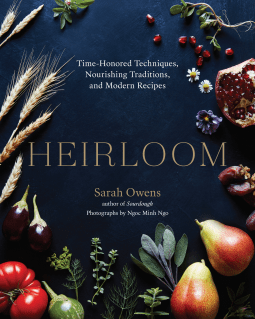
HeirloomIn Heirloom, Sarah Owens’ efforts to introduce cooks to using locally grown, “heirloom” food is commendable, and she writes eloquently and passionately about the benefits of doing so. A lengthy introduction leaves the reader fully informed as to why Owens prefers this kind of food and cookery, despite the sometimes  overblown descriptions and statements describing the relationship between humans and food consumption.

The recipes here are organized in two parts – by type such as fruits & vegetables, meats, and grains, then by season, which is helpful and supports the narrative style of the text.

There’s some definite “Earth Mothering” here, with recipes and instructions for making your own vinegar from carefully selected plants, and fermenting food which, let’s be real, regular people are probably not going to work into their busy lives, even though the recipes are totally fascinating!

And that leads me to my main criticism of this book – it is definitely written from a place of privilege. There’s little to no understanding by the author that many Americans live in food deserts, where they can’t easily access fresh food, and certainly can’t afford to pay for some of the ingredients used here. That said, this will find an audience with the semi-affluent to affluent Moms who are trying to get their families to eat healthy.

Publication Date: September 24, 2019
Published By: Roost Books
Thanks to Netgalley for the review copy

Books About Books, Fairytales, Magical

The Book Charmer by Karen Hawkins


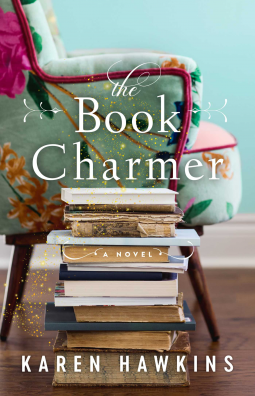
book charmerI have a fondness for books about books, so the description of The Book Charmer drew me in. Every once in awhile a book comes along that is a just a gentle affirmation on the goodness of neighbors, and this is one of them. The concept of a town librarian hearing books talk and giving the right book to the right person at the right time is the stuff of magic for people who love books. Pair that with a small town full of down to earth people who love each other despite their differences, and a set of main characters so appealing that it’s impossible not to like this book.

Comparisons will inevitably be drawn to Sarah Addison Allen’s Waverley novels and I’d be lying if I said the similarities didn’t occur to me. Like Allen’s stories, Karen Hawkins has imbued her characters and the town of Dove Pond with a certain kind of magic, which creates a modern day fairy tale for people who are searching for the right place to be in life, despite often rough beginnings. In Book Charmer, Hawkins offers a wrenching but hopeful looks into the foster system, but also into the decline of a loved one with Alzheimer’s. Mama G’s illness is handled with sensitivity and honesty, while Grace’s experiences as a foster child inform her adult life in ways she never expected.

Dove Pond is one of those places that you dream of, and you are left wanting to know these people in real life. That is the mark of a good story, and Hawkins fully succeeds here. Recommended.

Publication Date: July 30, 2019
Published By: Gallery/Pocket Books
Thanks to Netgalley for the review copy