
Children's

Books Unbound


I got the new Children’s Book Council newsletter in the mail today and settled down to read it over lunch. The article by Jean Gralley, Digital Picture Books: Breaking the Paper Habit caught my attention and got me thinking. Gralley presents a very persuasive argument for the develop of digital picture books — see her sample at http://www.jeangralley.com/books_unbound — and I’m curious to know what my KidLit friends out there think. I was totally caught up in Gralley’s digital example, but have to admit that I was mesmerized to the point of losing focus by the end. The possibilities for a new picture book art form in the digital world are endless, and her example combines simple digital features with two factors that mean a lot to paper readers — the reader still reads, and the reader controls the action (instead of turning a pager, the reader clicks “Go” to move forward.

However, Gralley doesn’t address another factor that I think is just as important – the physical setting and act of reading. When I was reading picture books to my kids, it was usually in bed, with me propped against the headboard and them in my arms while I held the book in front of us. That’s a closeness that you cannot fake. Is there a computer or digital reader out there that will mimic the physical attributes of a book and allow Moms & Dads to easily hold their kids while they read?  Or for that matter, allow a children’s librarian to hold a story in front of a group and read without breaking his or her arms?

Although I am completely fascinated by the concept and will watch its development, I wonder how the rise of digital picture books jibes with this article by Anastasia Goodstein on Ypulse about Kim John Payne and his research on the effects of “screen time” on ADHD children (excerpt follows):

We did a research piece into ADHD, and one of the three main requests that we made of our parents was to go screen-free for a period of four months. There was also a lessening of the schedule, lightening and simplification of the schedule, and dietary changes, simplifying diet. So it was simplifying information, simplifying diet, simplifying schedule. Sixty-eight percent of the kids — these were all diagnosed ADHD, all that stuff, none of them were on Ritalin. We asked them all of come off drugs. Sixty-eight percent of the kids went from clinically dysfunctional to functional in five months. And this is not using any drugs. When we combed through the information, what we found was that one of the single largest factors that parents reported in their weekly logbooks that made the most significant changes was going screen-free.When I’m talking about screen-free I’m not just talking about television, I’m talking about the lot [cell phones, computers, etc]. As parents went closer and closer to screen-free the kids got less and less hyperactive.

I think this says a lot about the need for time away from screens, yet is that going to be possible in the next decade? I don’t think so.
Children's

Harry Potter 7


I haven’t finished the whole book, but I did, like Adrienne, read the end first. I won’t spoil it for anyone who hasn’t finished yet, but may I just say…

Rock on, Mrs. Weasley, rock on!

Updated 7/30/07

I finished the book this weekend and I have to say it was simply magnificent. I honestly can’t remember the last time I went back and re-read parts of a book just because they were so incredible. The Battle of Hogwarts got me as choked up and emotional as the Battle of Helms Deep in Lord of the Rings. The cohesiveness of the story, from The Sorcerer’s Stone to The Deathly Hallows, is really amazing. What I kept thinking as I read was that Rowling has succeeded in taking the bones of folktales, adding flesh and blood, and telling an epic tale. The theme of choices and their consequences runs through all seven books like a red thread, culminating with Harry’s final and most important choice — to live for himself or die for others. Christian mythologists should have some fun with this one.

I know there are people out there with quibbles, and I had a few of my own, but so what? As pompous as this sounds, I believe we have witnessed the creation of a masterpiece of children’s literature.

Children's

The Hound of Rowan


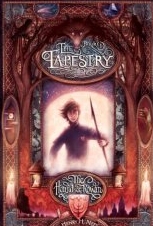
Hound of rowanI wrote a few weeks ago about The Next Harry Potter and whined a little about wanting to read a book that made me feel the way I felt the first time I read HP & the Sorcerer’s Stone. While Henry Neff’s Hound of Rowan isn’t exactly that, it sure comes close.

During an annual museum trip with his Dad, Max McDaniels discovers he has potential. But his “potential” is not your normal everyday kid potential. Nope. Max’s potential is magical, and a chance encounter with a golden threaded tapestry in the museum opens up a whole new world for the boy. Max eventually ends up at Rowan, an exclusive school for other Potentials, but not after being attacked by an odd little woman with hard, sparkly eyes. Once at school, Max discovers a number of pronounced talents — he can Amplify like nobody’s business (picture Superman’s quick trip around the Earth to turn back time when Lois dies on that highway in Superman: the Movie) and bears an odd similarity to Cuchulain, the Hound of Ulster from Irish mythology. As expected, a darkness is rising, and Max and his roommate David appear to be the duo that will save the world. Despite their efforts, however, the Darkness (in this case, Astaroth) does rise again, opening the door for more adventures.

The Hound of Rowan is awash in mythology, both modern and ancient, and Neff pays tribute to Those Who Have Gone Before. There are plenty of similarities to Harry Potter — the impetuous boy destined to save the world, the magic school, odd creatures, the village sweet shop — but there is a welcome and refreshing blending of imagery from other sources as varied as The Dark is Rising, Half Magic, The Mabinogion, Star Trek, Tron, and even Bedknobs and Broomsticks! I was particularly taken with the “Courses” students are required to master that use a concept similar to Star Trek: the next generation holodeck mashed up with the psychedelic bing-bing of Tron. The courses run “scenarios” that teach the students things like strategy and agility. And of course, the obligatory school sports game — not Quidditch but Euclidean Soccer — played remarkably like the soccer game on the Island of Naboomboo in Bedknobs & Broomsticks.

The copy I read was an advanced reading copy, and as expected there were a few things that needed to be fixed. I hope the final version provides a better characterization of David, Max’s roommate, as well as the backstory for Ronin (think Sirius Black). On the whole, however, Hound of Rowan is a total and complete romp, well worth your time, and highly recommended for grades 4 and up.

Children's

The Titan’s Curse


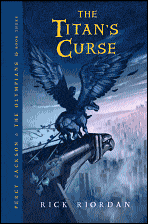
Titan’s CurseI’ve been a Percy Jackson fan since reading the first chapter of The Lightning Thief last summer, and Rick Riordan doesn’t disappoint with his latest. For those of you not familiar with Riordan’s series, Perseus “Percy” Jackson is a Son of Poseidon, a “hero” among men, who discovered his heritage in The Lightning Thief. In that story, its sequel Sea of Monsters, and now The Titan’s Curse, the gods of Olympus are alive and well, and living above Manhattan. Percy and other half bloods gather each summer at Camp Half Blood, where they learn how to be heroes. In The Lightning Thief, we discovered a traitor among the campers, Luke, whose mission in life is to restore the Titans to power. Remember your Greek mythology now — the Titans gave birth to the gods, who then destroyed their parents and claimed power over all the world. But Titans cannot die, they can only be rent into tiny shreds, which apparently can be out back together. And if the granddaddy of all titans gets put back together, it will be Really, Really Bad.

In Titan’s Curse, Percy heads off on a quest to rescue pal Annabeth, Daughter of Athena, who disappears during a mission in which we meet Artemis and her hunters. After regrouping at Camp Half Blood, Percy sneaks off on a quest to save Artemis and Annabeth with two of the hunters, satyr Grover, and Thalia, Daughter of Zeus. Monsters galore pursue them, from the Smithsonian Air & Space Museum to Hoover Dam to San Francisco, where they eventually find Annabeth and Artemis, who has been tricked into holding up the world for the titan Atlas. As expected, our heroes triumph and the world is saved once more.

As I wrote about the first two in this series, there are remarkable similarities to Harry Potter, but despite that this is one rip-roaring good story. The monsters and creatures are fabulous — the winged statues from Hoover Dam that break free and transport the heroes to San Francisco made me envision two big Oscars flying through the sky — and the characterizations of the gods are wonderful — who could resist an Apollo who spouts bad haiku and talks like a Surfer Dude? I pictured Jeff Spicoli every time. Riordan does a masterful job blending Greek mythology with the 21st century, and has created a core of entertaining characters who should keep the world safe for years to come. Highly recommended for grades 5 and up.

Children's

The Next Harry Potter


Here’s an interesting post about the next Harry Potter. Apparently, the editor who discovered Harry and gang has just discovered the next great thing to hit children’s literature — Tunnels, a series about a boy archaeologist who discovers a world of tunnels beneath London. H’mmmmm. Kiki Strike fans? Anything sound familiar?

Am I the only one getting tired of the “Next Harry Potter?” It seems to me that much of the children’s fantasy I’ve read lately is derivative of HP, which of course is derivative in and of itself. The boy hero fighting immeasurable evil supported by two stalwart friends? You children’s lit afficiandos out there should remember the “rule of three” from a multitude of folktales. If not, go find a copy of Best-Loved Folktales of World by Joanna Cole and read a few. You’ll see what I mean. I read Rick Riordan’s newest Percy Jackson book, The Titan’s Curse, last weekend and again was struck by how much the whole plot and character ensemble resembles HP. Of course, the mythology is slightly different but the basic ensemble is the same.

I remember first reading Harry Potter and the Sorceror’s Stone and loving it to pieces. It was something new and exciting and very, very special. I want to feel that way again about a children’s book. Don’t you?

Children's

The Invention of Hugo Cabret


It’s not often a book comes along that blends elements of the novel, the picture book, and the graphic novel all in one…and it works. The Invention of Hugo Cabret by Brian Selznick is one of those books. The story of Hugo, an orphan who lives in the walls of the Paris train station, is told via a skillful combination of narrative and illustration that evoke the flip books of my youth.

Hugo, the orphaned son of a master horologist (clockmaker), is taken in by his uncle, the clock-keeper at the Paris train station, after his father perishes in a fire at the museum where he had been working on fixing an automaton. Hugo’s uncle, a horologist but also a drunk, shows him how to care for the clocks in the station. When his uncle fails to return from a night of drinking, Hugo becomes the keeper of the clocks, but also manages to resurrect the automaton project that his father was working on. Hugo becomes obsessed with getting the mechanical man to work, thinking that the automaton contains a secret message from his father. Through the course of his work on the automaton, Hugo becomes involved with a young girl and an old toymaker who is much more than what he seems. Together, they unravel the mystery of the mechanical man, resulting in a rich and wondrous foray into the world of early movie-making.

Selznick uses pages of illustrations to tell portions of the story without words. Chapters are interspersed with page upon page of wordless drawings, which work to convey an unexpected tension and sense of expectation that mere words would never accomplish in a novel such as this. The illustrations, done in rough charcoal sketches, shrink or expand according to the plot — a convention which reminded me very much of Zoom by Istvan Banyai. Reading this 800 page book in a day was effortless, and as I read, I wondered if there has ever been a book nominated for both a Caldecott and a Newbery in the same year. Perhaps 2007 is that year.

Thanks to Kathy Wolf of the Rochester Public Library’s Children’s Center for recommending this one!

Children's

The Boy Who Was Raised By Librarians


I received one of those friendly little alerts from Amazon.com this morning about this book so I headed over to Amazon to check it out, pre-pub. At first, I thought it was illustrated by the same guy who did one of my all-time favorite children’s books, Double Trouble in Walla Walla written by Andrew Clements & illustrated by Sal Murdocca. Alas, it’s not, but the cover art still rocks. Here’s the Amazon blurb…

This humorous tale of a curious young boy and his single-minded quest for knowledge is a heartfelt and affectionate tribute to librarians everywhere.

Every day after school Melvin goes to the library. Everything has its place in the library and Melvin likes it that way. And his favorite people–Marge, Betty, and Leola-are always in their places, behind the reference desk.

When something interests Melvin, his librarian friends help him find lots and lots of books on the subject. When he collects creepy bugs in a jar, they help him identify, classify, and catalog the insects. When he is cast as the Enormous Eggplant in the school play, Betty reads aloud from Organic Gardening to help him find his motivation.

As the years pass, Melvin can always find the answers to his questions-and a lot of fun-in the library. Then one day he goes off to college to learn new things and read new book. Will he leave the library and his friends behind forever?

Readers will enjoy Brad Sneed’s delightful illustrations that colorfully capture the fun-loving spirit of Carla Morris’s story about the contagious enthusiasm of learning.

Lucky librarians know a kid like this; luckier ones know several kids like this. There really isn’t anything more satisfying than seeing a kid who has used the library regularly –I mean really used its resources — grow up to become something special. I’ve had the pleasure of knowing several kids like that and when I’m doubting my choice of profession, thinking about these kids always brings me back around.

There’s Karl Slominski, who was part of my very first young adult book discussion group back in 1996 and who, at age 13 created a full-sized wall mural in my old library and called it “The Stuff that Dreams Are Made Of.” Karl is now a successful graphic artist whose work can be see at Slomotion Art. Last I heard, he was working on storyboards for a new Edward Norton movie.

Then there’s Kaylen Lott, who was part of my young adult volunteer group back in the late 1990’s and who is now doing graduate work in immunology at Upstate Medical Center in Syracuse. I remember Kaylen telling everyone she was going to save the world, and now she’s on the way to doing just that.

What I love so much about books like The Boy Who Was Raised By Librarians is that they do such a fabulous job of explaining what we do and how much of an effect we have on children. Now the real challenge is getting some of those kids whose lives we change in the positions of power that control the money. That’s why I love George Maziarz so much. Every time I see him, he tells the story of how he grew up right next door to the Tonawanda Public Library and how he spent so much of his childhood inside that building. And today, he is one of the strongest supporters of libraries in Albany. We need more like him.

This post is also published on my library blog – Sources of Inspiration.