Lately it seems harder and harder for me to find a book that I want to read all the way through. And it’s even more rare to find one that doesn’t make me want to read the end first. *Yes, I am a confessed end-reader. It’s one of the benchmarks I use to determine if a book will find a place on my “you have got to read this one! list” — if I can read the end and still want to read the whole book, it’s got a place on my list.* But, I digress….
Maisie Dobbs is one of those books. I was hooked from the very first page…even from the very first sentence…
Even if she hadn’t been the last person to walk through the turnstile at Warren Street tube station, Jack Barker would have noticed the tall, slender woman in the navy blue, thigh-length jacket with a matching pleated skirt short enough to reveal a well-turned ankle.
What caught me was Maisie’s response to Barker, which, paraphrased indelicately, comes out to her telling Barker that it was, indeed, cold enough to freeze the **** off a brass monkey. What cheek! I liked her right away. We then read on to learn that Maisie lost her mother at 14 and was put into service by her well-meaning father. Fortunately for Maisie, she’s found a place in a very well-advanced household, where, when she is discovered sneaking into the manor library at night to read Hume, Kierkegaard, and Jung, her employer arranges for Maisie to actually be educated by the enigmatic Maurice Blanche. Maisie eventually wins entrance to Cambridge, but cuts her time there short in order to serve in The Great War as a nurse, where she falls in love and experiences terrible tragedy firsthand. After the war, Maisie hangs out her shingle as a “Psychologist-Investigator” and begins to take on cases. Her first case takes her straight back to the war, when she becomes involved with a group of wounded soldiers who live away from society at a place called The Retreat. Maisie discovers the truth about The Retreat, and in the end is face to face with her own horrors from the war.
The characters are well-drawn and, for the most part, likable. It was obvious that this was intended to be the first of a series, because there are many unanswered questions and lots of flashbacks and foreshadowing. I’m looking forward to getting to know Maisie better in the next two books.
I’ve been getting messages from some of you worried that I’ll never finish my list. Well, here ya are….
Jane Eyre has been one of my most favorite books since I was around 13. I read it first in high school and loved it, then read it again in a women’s studies class in college and loved it even more. There is no book better.
Locked Rooms by Laurie King is by far my most favorite in her Mary Russell-Sherlock Holmes series, which began with The Beekeeper’s Apprentice.
The Moonstone by Wilkie Collins is considered to be the first “mystery” novel written. The language is a little hard to wrap yourself around because it is soooo 19th century, but the story is spooky and mysterious.
Shattered Silk by Barbara Michaels is one of those books you read on vacation, year after year after year. Michaels’ work is very reminiscent of the old gothic romances that were published by the thousands in the 1970s. A little mystery + a little romance = a good read.
Pope Joan by Donna Woolfolk Cross is one of those books that suck you in and before you know it, you’ve read half of it in one sitting. It’s a book that makes you wonder…
Every once in awhile, I put forms out at the library and ask people to share the titles of their ten most favorite books. I always find new authors and titles this way, and our patrons love looking at what everyone else likes to read. My list tends to change each time. Here’s the first 5 on my current list…
Daughter of Timeby Josephine Tey always makes my list. A spectacularly easy read about the mystery of Richard III and the young princes in the Tower. Did he kill them, or didn’t he?
River of Darknessby Rennie Airth is one of the best English mysteries I’ve read in years. However, it is currently rivaled by Airth’s follow-up, The Blood Dimmed Tide.
A Gracious Plenty by Sheri Reynolds is a must-read for anyone who has lost someone they love and wonders about the afterlife.
All the Harry Potterbooks make my list. This is far and away the best fantasy series written since Lord of the Rings.
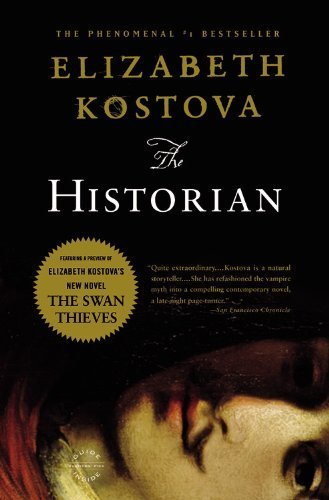
The Historian by Elizabeth Kostova is my pick for the must-read of 2005. Spooky and delicious.
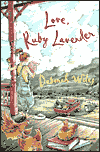
Love, Ruby Lavender by Deborah Wiles “Woe is Ruby Lavender. She used to have a fun life, until her Yoo-Hoo drinking, pink muumuu-wearing, best friend of a grandmother up and left for Hawaii to spend the summer with her new (smelly) grandbaby. Now Ruby is stuck in boring old Halleluia, Mississippi, reading to her chickens, sweeping floors at the general store (torture), and being tormented by the curly-haired, tip-tapping Melba Jane who knows a terrible secret about Ruby. In letter after letter, 9 year old Ruby pours out her heart to her grandmother, but there is one thing Ruby cannot tell even her grandmother – the very same thing that makes Ruby take the long way home every single time and that makes her hate Melba Jane more than anyone.” Ruby reminds me of a young Sweet Potato Queen (and if you haven’t read the Sweet Potato Queen books by Jill Connor Brown, read them now!). She is feisty, funny and just an all-around neat kid. Read this with your 2nd or 3rd grader. You’ll be glad you did!
Leavin’ Trunk Blues by Ace Atkins In the music clubs on the South Side of Chicago, the blues, once as strong as the backs of the neighborhood’s working class, has lost its hope and its voice. Seventy miles away, locked in a lonely prison cell, waits Ruby Walker. More than forty years ago, she boarded the Illinois Central from Mississippi to what she believed was her Promised Land. She became one of the greatest blues singers the city has ever known, but she lost it all after being convicted of murdering producer Billy Lyons in September 1959. Decades later, a flickering hope emerges to Walker in the form of letters from a Tulane University blues historian named Nick Travers. She agrees to an interview only in exchange for him checking out what she calls the truth behind Lyons’s last hours. This second Nick Travers novel by Ace Atkins is an adequate follow-up to Crossroad Blues, which was not as violent and a whole lot more interesting. Leavin’ Trunk Blues explores the darker side of the music business and the seamier side of Chicago, none of which appeals to me much. Crossroad Blues had some magic in it that Atkins just hasn’t recreated here. If you really, really love the blues, read this. If not, don’t waste your time.
Tears of the Dragon by Holly Baxter launches what the publisher claims to be a new “cozy” series but which is laced with some good ole American grit. The story opens with our intrepid heroine, Elodie Browne, nervously lunching in the cafeteria of Chicago’s Gower Building with her flighty yet steely chum Bernice. Elodie is nervous because she got caught in the wrong place at the wrong time and witnessed what she is very much afraid was a “bad thing.” Our Miss Browne is advised to forget what she saw and heard by pretty much everyone — Bernice, her somewhat wayward cousin Hugh, her smart sister Maybelle and domestic sister Marie…the list goes on. The trouble is, Elodie can’t forget about it, especially not after she actually witnesses the murder of the man who she heard kidnapped. Enter a gruff but honest red-haired detective named Archie, who immediately rubs Ellie the wrong way. You just know that Archie & Elie will end up together, and they do. Their essential niceness makes a nice contrast to the gangsters and grit so often associated with Chicago in the 1930s. Ellie & Archie’s goodness is balanced by the evilness of “them” — Al Capone, Bugs Moran, and a whole passel of Chinese gangsters bent on introducing heroin to the streets of Chicago. Lots of gunfire and a big fire are offset by good coffee and homemade blueberry muffins. Sound like strange bedfellows? Well, not in this sweet little story. Not the cleverest story I’ve ever read, but the characters have potential.
The Italian Secretary by Caleb Carr – Not exactly what I expected, but good nonetheless. After all, how can a book featuring Sherlock Holmes, Queen Victoria and Mary, Queen of Scots be bad? Here’s what the publisher has to say about the book…
“Caleb Carr’s newest tale (commissioned by the estate of Sir Arthur Conan Doyle) begins when Sherlock Holmes reveals to Dr. Watson an encrypted telegram he has received from his brother Mycroft; the famous detective has been summoned to the aid of Queen Victoria in Scotland. Rushed northward on a royal train – and nearly murdered themselves en route – Holmes and Watson are soon joined by Mycroft, and learn of the brutal killings of a renowned architect and his foreman, both of whom had been preparing to renovate a wing of the famous and forbidding Royal Palace of Holyrood, in Edinburgh.” “Mycroft has enlisted his brother to help solve the murders that may be key elements of a much more elaborate and pernicious plot on the Queen’s life. But the circumstances of the two victims’ deaths also call to Holmes’s mind the terrible murder – in the palace of Holyrood – of “The Italian Secretary,” David Rizzio. The only difficulty? Rizzio, a music teacher and confidante of Mary, Queen of Scots, was butchered before Mary’s very eyes three centuries earlier by supporters of England’s Queen Elizabeth (and perhaps with the approval of that uncompromising ruler herself) in an attempt to break the spirit of the very independent young Scottish Queen.” Holmes proceeds to alarm Watson with the suggestion that the Italian Secretary’s vengeful spirit may have taken the lives of the two men as punishment for disturbing the scene of his assassination. Will these two new deaths turn out to be mere coincidence? Have old political rivalries reared their poisonous heads once again? Or has the Italian Secretary indeed exacted his own terrible revenge?
My opinion? Carr tries too hard to emulate Conan Doyle’s elaborate writing style. I pity the performer who’s hired to read for the recorded book version of this one…he or she is going to have to have quite advanced breath control. Despite the heavy, descriptive text, Carr has produced a story that compares well with the original Holmes stories. Dr. Watson is fleshed out a little more thoroughly than in Conan Doyle’s work, and Holmes’ mysterious brother Mycroft is also given a more complete treatment here, both of which add a nice flavor to the story. This is definitely a must-read for Holmes fans.
And now for the Miss….
The Magician’s Assistant by Ann Patchett. Let me just say this….AAARRRGGGHHHHH! Awful, awful, awful. Almost as bad as The Gospel of Judas. The book jacket starts off by asking….
“What is to become of a magician’s assistant without her magician?” I answer…”WHO CARES!?!?!”
Very cliched and predictable. Most everyone else I know loved this book. Maybe I was just cranky when I read it, but I don’t think so. This is an example of the pretentious sort of writing that literary critics love but that I guess I just don’t get.
The Historian by Elizabeth Kostova has to be one of the most compelling books I’ve read in a long time. As a librarian who loves history, I am always drawn to stories that involve historical research, and this one combines that with another topic that has interested me since childhood — Dracula. I read this while on vacation in July and, though I found it very long and somewhat slow in parts, I was enthralled. This is what Barnes & Noble has to say about the book:
“For centuries, the story of Dracula has captured the imagination of readers and storytellers alike. Kostova’s breathtaking first novel, ten years in the writing, is an accomplished retelling of this ancient tale. “The story that follows is one I never intended to commit to paper…. As an historian, I have learned that, in fact, not everyone who reaches back into history can survive it.” With these words, a nameless narrator unfolds a story that began 30 years earlier.Late one night in 1972, as a 16-year-old girl, she discovers a mysterious book and a sheaf of letters in her father’s library — a discovery that will have dreadful and far-reaching consequences, and will send her on a journey of mind-boggling danger. While seeking clues to the secrets of her father’s past and her mother’s puzzling disappearance, she follows a trail from London to Istanbul to Budapest and beyond, and learns that the letters in her possession provide a link to one of the world’s darkest and most intoxicating figures. Generation after generation, the legend of Dracula has enticed and eluded both historians and opportunists alike. Now a young girl undertakes the same search that ended in the death and defilement of so many others — in an attempt to save her father from an unspeakable fate.” There are very few books I buy and keep. This is one of them.
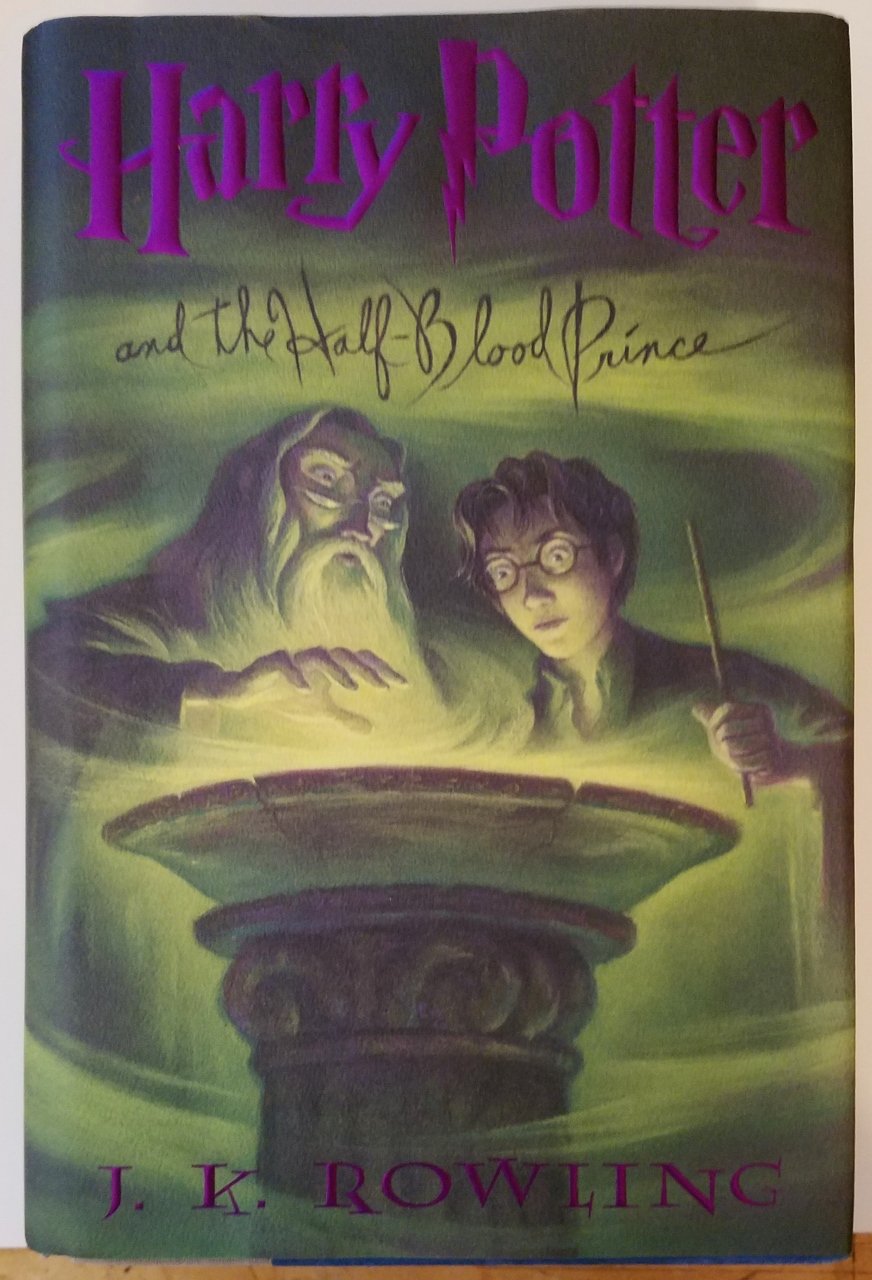
Harry Potter and the Half-Blood Prince by J.K. Rowling…
What can I say? I laughed. I cried. I want the next book…NOW! For those of you who haven’t read it, stop now because there are spoilers to follow.
The Internet abounds with speculation on what will happen in Book 7. Here are my thoughts.
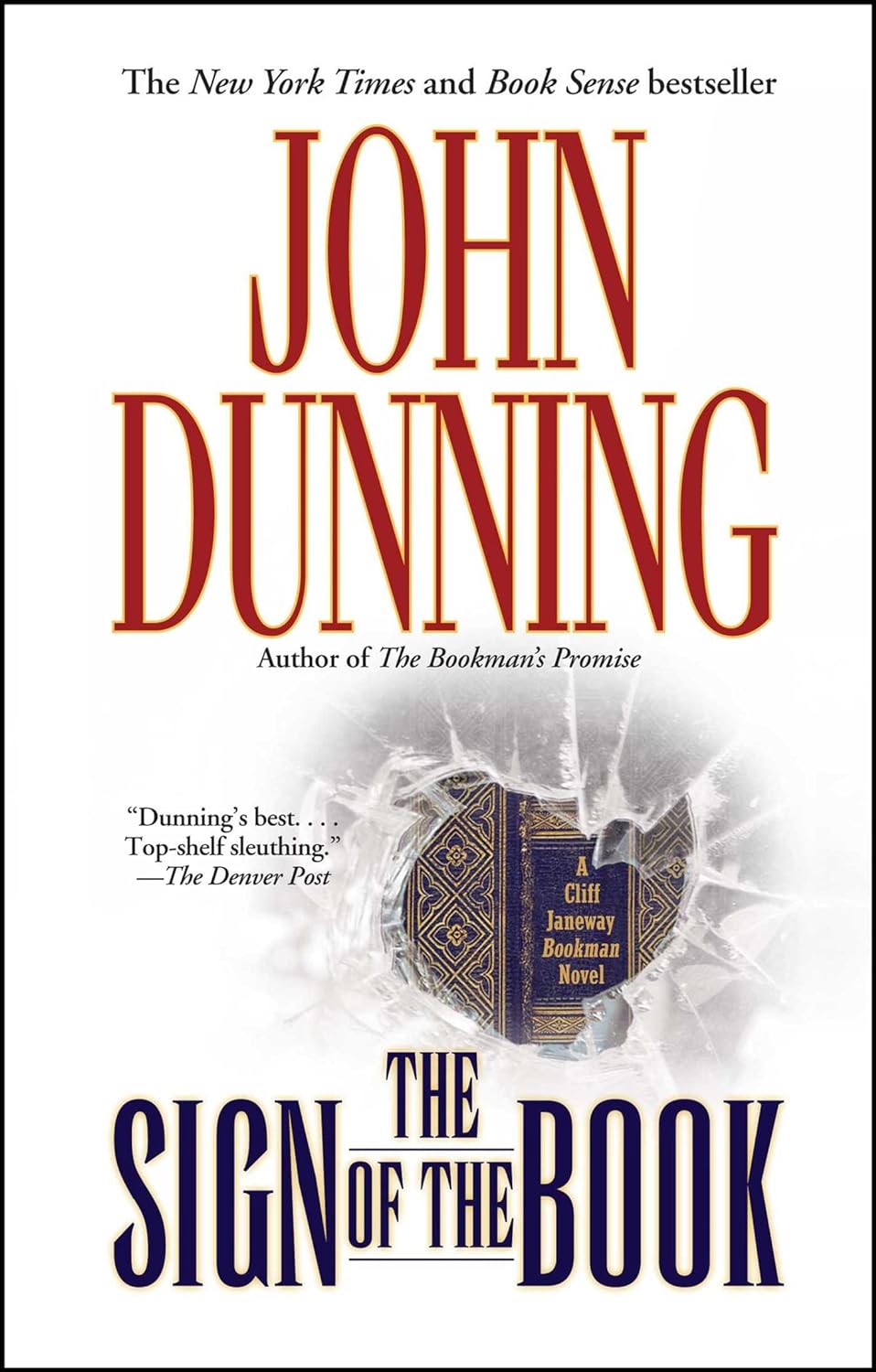
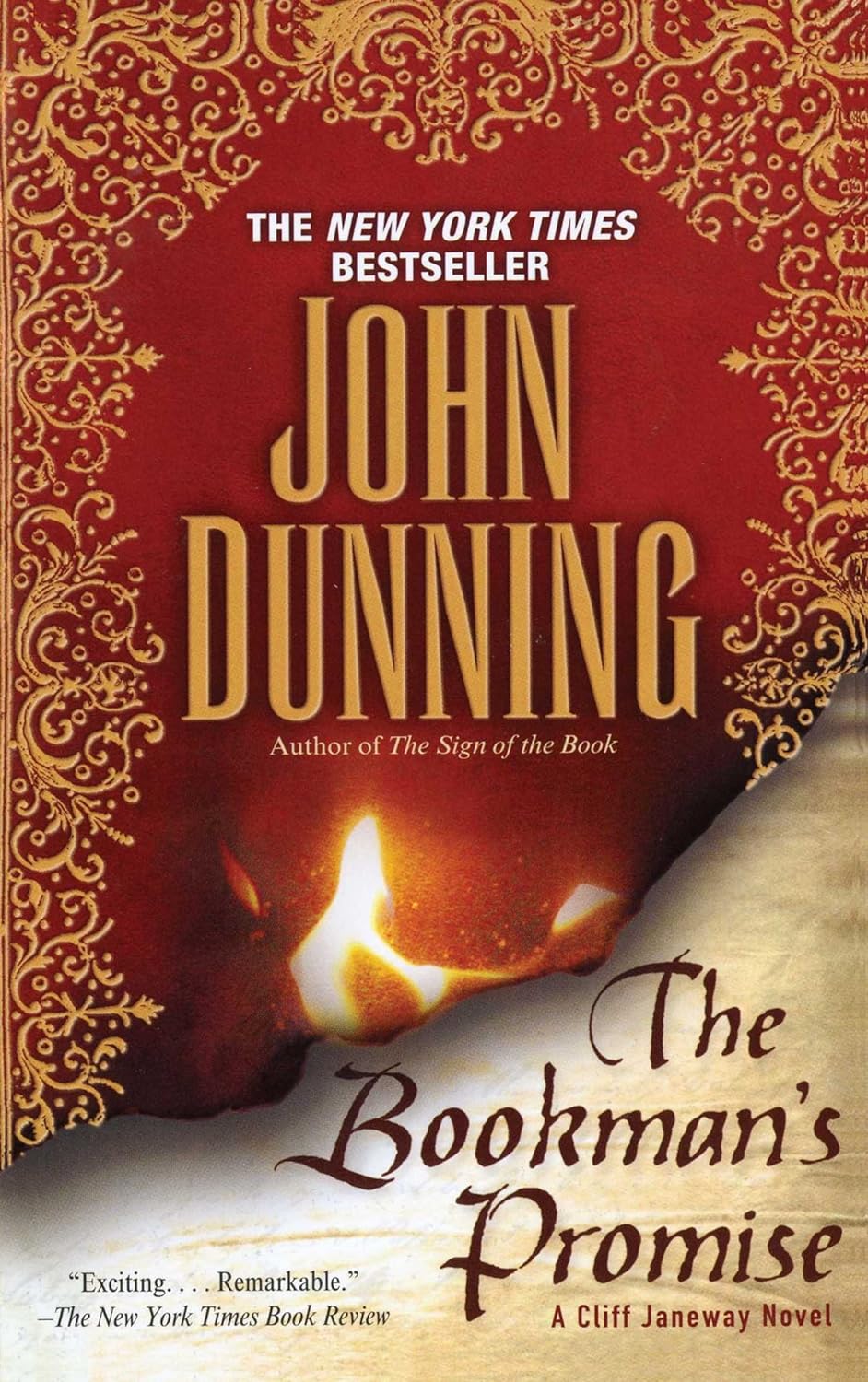
The Bookman series by John Dunning has been my latest passion. I first read about this series in a very cool new magazine we’re getting at the library called Bookmarks, which is all about books and reading. Anyway, I love stories about books. Sounds weird, huh? I freely admit I am a book geek. I loved Codex by Lev Grossman, The Codex by Douglas Preston, and several other mysteries featuring bibliophiles. However, the Bookman series is just the best by far. The protagonist, Cliff Janeway, is a former Denver police detective who harbors a sincere passion for books. The first in the series, Booked to Die, features Janeway still in his role as police detective, but included in the story are the events that occur which end his police career and begin his career as a book collector and seller. Sprinkled throughout all the stories are bits and pieces of eclectic information about books, what makes them valuable, and what make people kill for them. I whipped through these books in record time and highly recommend them to anyone who, like me, loves books and mysteries.
The Know-It-All: One Man’s Humble Quest to Become the Smartest Person in the World by A.J. Reynolds. Reynolds, a staff writer for Entertainment Weekly and Esquire, decided one day to take on a task attempted by his genius father (who, incidentally, calculated the speed of light in fathoms so he would be the only person in the world to have that esoteric information) and spent a year reading every volume of the Encyclopedia Britannica. Why, you ask? Apparently, Mr. Reynolds, who firmly believed he was the smartest boy in the world when he was a child, had begun to feel un-smart and thought it was time to bulk up the brain. The book started off being very entertaining. I could read it in snippets when I had a few extra minutes here and there, and it did alleviate the boredom of sitting in a few doctors offices. However, I quickly tired of the author’s cleverness. Sure, there are a few good entries that made me laugh out loud, but by the time I got into the J’s, I just found the whole thing incredibly annoying.
Lamb: The Gospel According to Biff, Christ’s Childhood Pal by Christopher Moore. “The birth of Jesus has been well chronicled, as have his glorious teachings, acts, and divine sacrifice after his thirtieth birthday. But no one knows about the early life of the Son of God, the missing years – except Biff. Ever since the day when he came upon six-year-old Joshua of Nazareth resurrecting lizards in the village square, Levi bar Alphaeus, called “Biff,” had the distinction of being the Messiah’s best bud. That’s why the angel Raziel has resurrected Biff from the dust of Jerusalem and brought him to America to write a new gospel, one that tells the real, untold story. Meanwhile, Raziel will order pizza, watch the WWF on TV, and aspire to become Spider-Man. Verily, the story Biff has to tell is a miraculous one, filled with remarkable journeys, magic, healings, kung fu, corpse reanimations, demons, and hot babes – whose considerable charms fall to Biff to sample, since Josh is forbidden the pleasures of the flesh. (There are worse things than having a best friend who is chaste and a chick magnet!) And, of course, there is danger at every turn, since a young man struggling to understand his godhood, who is incapable of violence or telling anything less than the truth, is certain to piss some people off. Luckily, Biff is a whiz at lying and cheating – which helps get his divine pal and him out of more than one jam. And while Josh’s great deeds and mission of peace will ultimately change the world, Biff is no slouch himself, blessing humanity with enduring contributions of his own, like sarcasm and cafe latte. Even the considerable wiles and devotion of the Savior’s pal may not be enough to divert Joshua from his tragic destiny. But there’s no one who loves Josh more – except maybe “Maggie,” Mary of Magdala – and Biff isn’t about to let his extraordinary pal suffer and ascend without a fight.” Moore’s work reminds me of John Irving’s early work. His story ideas are so fresh and original that I can’t keep away from his books. I thought Fluke was out there, but Lamb far surpasses the witty and fearless writing in that book. Despite the wry and often irreverent humor in Lamb, the life of the Christ simply shines. Moore has rooted out the best things about Christ and the beginnings of Christianity — such as forgiveness, bloodless sacrifice, and love — things that, 2000 odd years later, have in many ways been sucked out of the daily lives of the believers. A truly extraordinary book.
The Good Earth by Pearl Buck. This was the December selection for the library book club. Admittedly, I didn’t have a whole lot of time to read it during the month, but I had read it years ago and sort of remembered the story. In fact, I read it for Sr. Joan’s Social Studies class at Nazareth Academy way back in 1978. Do I remember much of the book? Not really. What I remember the most was the field trip Sr. Joan took us on to the May Ling Chinese restaurant at the corner of Lake and Ridge. This was an annual event for her class that was apparently much anticipated by some of the more regular customers at the adult book store located just before the restaurant. Picture a whole gaggle of Catholic school girls trooping down Lake Avenue, led by a nun who I believe could have easily taken down any lecherous old man who looked at one of us the wrong way. What was she thinking? Funny how age and motherhood gives you a whole different perspective on things. What struck me during our discussion was that the role of women portrayed in the book isn’t much different than what we’re seeing now in Afghanistan and the Middle East. Buck wrote the story of O’Lan and her husband way back in the early 20th century, yet little has changed in the East. *Sigh*
The Weeping Woman by Michael Kilian. The first in Kilian’s Jazz Age series of mysteries starring the intrepid Bedford Green, former writer, current owner of a less-than-successful art gallery in Manhattan. Peppered with lots of real life characters from the 1920’s like Picasso, the Fitzgeralds and the subjects of my current favorite biography*, Sara and Gerald Murphy, The Weeping Woman is pure fun to read. Mix up a pitcher of martinis and go to town!
Everybody Was So Young by Amanda Vaill. Gifted artist Gerald Murphy and his elegant wife, Sara, were icons of the most enchanting period of our time; handsome, talented, and wealthy expatriate Americans, they were at the very center of the literary scene in Paris in the 1920s. In Everybody Was So Young, Amanda Vaill brilliantly portrays both the times in which the Murphys lived and the fascinating friends who flocked around them. Whether summering with Picasso on the French Riviera or watching bullfights with Hemingway in Pamplona, Gerald and Sara inspired kindred creative spirits like Dorothy Parker, Cole Porter, and F. Scott Fitzgerald (Nicole and Dick Diver in Tender is the Night were modeled after the Murphys). The era of the Lost Generation has always fascinated me, and Vaill provides a delicious keyhole look at this period and the people who made it so colorful.
The Purpose Driven Life – I was inspired to read this book when some people at my church decided to read it as a group beginning in Lent and reading through Easter to the Ascension. It’s a simple commitment, really. Read one chapter a day for 40 days and figure out your purpose in life. I was pretty skeptical, probably because during the course of the last 20 years that I’ve spent in libraries, I’ve seen hundreds of books like this one come and go. And truthfully, this one isn’t much different. Don’t misunderstand me, it’s a lovely, thoughtful, thought-provoking book, but it’s just one in a long line of books intended to help the average Joe’s and Josephine’s of the world make sense of their lives. Maybe I’ve just become too jaded, or maybe I’ve just come to my senses as I’ve gotten older, but I don’t expect an author, no matter how honorable his or her intentions, to be able to navigate the various paths of my life and cause everything to fall neatly into place. Life isn’t sensible, and once you accept that, you can find a purpose.
The Game by Laurie King – The latest in King’s Mary Russell-Sherlock Holmes series is just as witty and engrossing as the earlier books. This time, Russell and Holmes are out to find Kimball Harris, the real-life inspiration for Rudyard Kipling’s Kim, who is actually a spy for the British Empire. Their travels take them from London to the Middle East, to India and Tibet. Good fun.
True Southern Tales and Weird Stories — I’ve been having great fun reading a couple of those pulpy “true stories” books that are made up of short chapters about things like alien encounters, men in black, green children, spontaneous human combustion, huge fish, and other weird stuff. I used to love the Ripley’s Believe It or Not pulp paperbacks when I was a kid, and I’ve just been having a blast immersing myself in these goofy stories.
Candy and Me: A Love Story by Hilary Liftin – This was one of the Online Book Club selections a couple weeks ago and I LOVED the daily chapters. I just got the book from the Rochester Public Library and can’t wait to dive in and finish it. Although I’m not a big candy eater, my daughter is and I’m considering reading the book aloud with her. I totally identified with Liftin’s mother who lost it when she kept finding mounds of empty candy wrappers stuffed behind Hilary’s bed. I just started keeping a jar of empty wrappers in my laundry room — it holds all the wrappers I pull out of Lizzie’s pants every week. We found a stash of Laffy Taffy under the living room couch this morning. What kills me is that the child never has any cavities, and never gains any weight! She hasn’t gained more than 5 pounds in the last 4 years.
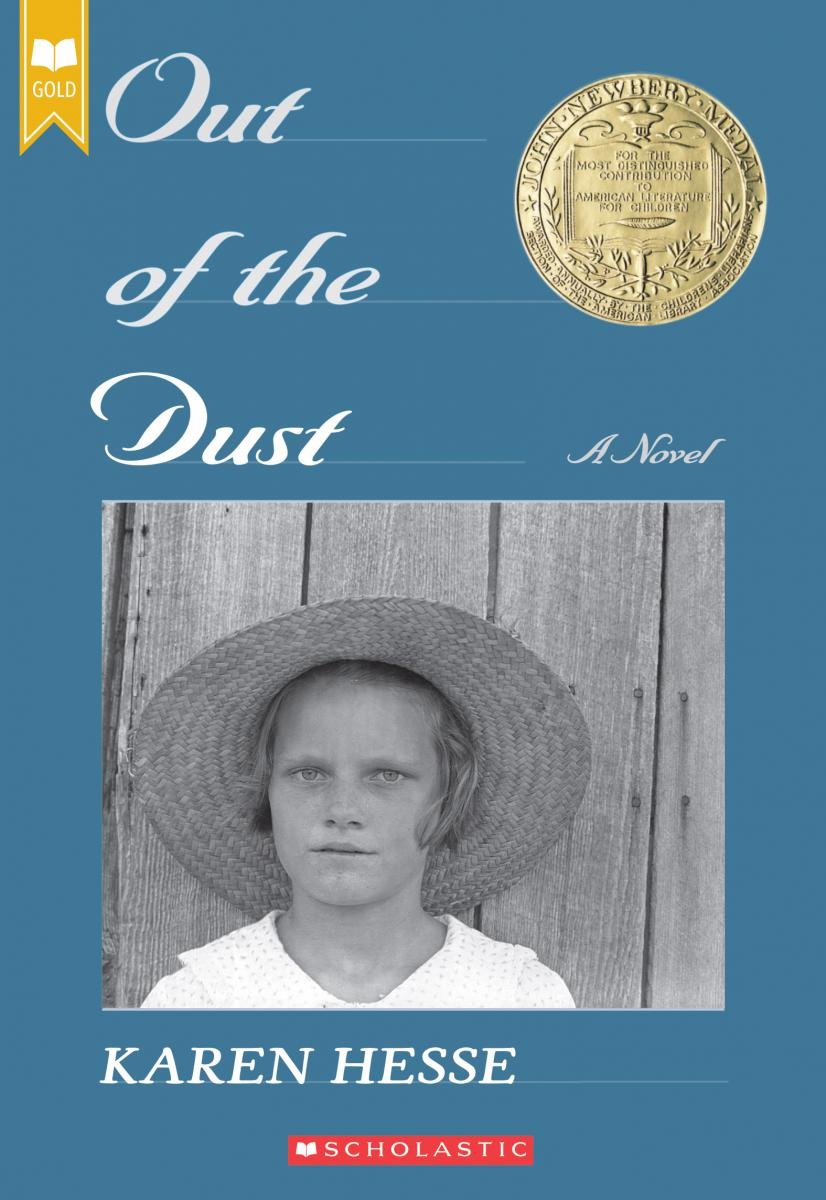
Out of the Dust by Karen Hesse – I first read this a few months before it won the Newbery and remember feeling kind of puzzled. Everything about it was unusual — from the photo of the girl on the cover to the way the text was written in blind verse. I don’t think I paid it very much attention, and I recall being surprised it won the Newbery. I recently read it again and found much more affecting. The story itself is heartbreaking — Billie Jo essentially kills her mother by accidentally throwing a pot of burning kerosene right in her face. She also badly burns herself and spends the next year or so coming to terms with both the loss of her mother and the loss of her ability to play the piano. Hesse’s use of the verse lends a lyrical quality to story, and I noticed this time through how she actually shaped the verse to resemble the subject — e.g. the verse on playing the piano is actually shaped like a piano keyboard. Although this is a children’s book, I think adults would appreciate it, too.
Fierce Invalids Home from Hot Climates by Tom Robbins. A hoot! I want my grandchildren to call me “Maestra!” Very, very good.
Martyrs by Edo Van Belkom. Very, very strange. I never finished it. There are some people who finish every book they start. Not me. If a book is so boring that it makes me want to read the last chapter right away, it’s not worth wasting my time. This one was definitely a time-waster.
These is My Words by Nancy Turner. Heartbreaking. Reminded me of Out of the Dust a little bit. This is supposed to be the journal of a pioneer woman — still not sure if it’s based on a true story or not, but it doesn’t matter. The characters are fabulous and the story is a page-turner. The main character actually reminded me of the grandmother in Angle of Repose by Wallace Stegner. If you like stories about strong women and have a taste for the Old West, give this one a try.
The Blues Ain’t Nothing: Tales of the Lonesome Blues Pub by Tina Jens. Funny and irreverent so far. Stayed that way all the way to the end. What’s better than a haunted blues bar? A haunted blues bar with a skinny little girl who plays a mean riff and doesn’t take any crap from anyone.
Uncharted Journey by Donatella Young – I plan to write a review of this one when I have time. The author is local (lives in Penfield) and came to the library book group when we discussed this. A gem of a book.
An American Tragedy by Theodore Dreiser – read this one way back when at Nazareth Academy and thought it was awful. Read it again for my book group and decided I kind of like it. I’m still not a big fan of the tendency of early 20th century American authors to over-describe everything, and I now that I’m older and (maybe) a little wiser, I really question the literary discussion methods used by so many of my high school and college teachers. I’m thinking maybe all these authors never really intended for every single sentence in their books to have a hidden meaning.
Lake of Dead Languages by Carol Goodman – also reading this for book club. A fabulous book. A good mystery that takes place at a girls prep school in eastern NY. Some of the characters reminded me of girls I knew at St. Lawrence University. Will write a review when I have time, but it’s enough to say read this book…it’s great!
Dark End of Street by Ace Atkins – another terrific mystery from Atkins. His blues historian detective, Nick Travers, is back and meaner than ever. He is quickly becoming one of my very favorite characters.
The Sinister Pig by Tony Hillerman – the latest in the Jim Chee series by Hillerman. I think the name would be an excellent one for a bar. However, despite the cool title, this one was kind of unremarkable. I think Hillerman may have entered the Danielle Steel-Stephen King Level of Hell where he is now destined to re-write all the stories he’s already written, but with new characters.
Paula by Isabel Allende – read, or tried to read, for my book discussion group at the library. The author is very self-absorbed, although the writing was very eloquent.
Spilling Clarence – read for book group – a small town is victim to a chemical spill, but the chemical has an odd effect. Everyone who is contaminated suddenly can remember everything they’ve ever experienced. I had to stop reading it because two of the characters have lost their mothers and it made me think of my own mother who passed away in 1984, and how much I miss her. I don’t know how I’m going to talk about this one.
The Gospel of Judas by Simon Mawer – I’ve tried to get through this dog. I really have. It’s better than a Tylenol PM.
The Last Detective by Robert Crais – I promised myself I wouldn’t start this one until I finished the two above, but I had to get a little taste of it. Crais is one of my current favorite writers. Note to H. David — you would like this author.
Perfume: The Story of a Murderer by Patrick Suskind. Very weird book, and a little too graphic for my taste. All about a strange boy born with no sense of smell and his search for the perfect fragrance. Doesn’t sound like it would be a dark-edged murder story, but it is, and believe me, it is extremely creepy. So, I gave it to Anne Marie when I finished.








 It's All About the Book