I’ve never read any of Peter Lovesey’s books, but I was nonetheless saddened to read of his death on April 10. Shelf Awareness ran a short piece on his career and I learned a whole lot of things about this prolific writer whose books I clearly remember shelving way back when I was a library page.
Did you know that Lovesey is credited as the first to successfully set a detective series in the past? His series featuring the Victorian detective Sergeant Cribb explored gritty crime in settings such as music halls and underground boxing rings. Cribb’s adventures were made into a popular television series in the late 1970s, which I now must try and track down (hoping I might find an old DVD in a library somewhere!)
Lovesey went on to write a popular contemporary series featuring hard-as-nails detective Peter Diamond. This is the series I am now reading! There are dozens of Diamond stories out there, and I am determined to read each one.
Lovesey concluded the Diamond series with his last publication, Against the Grain, in 2024.
Lovesey concludes his long-running series featuring Bath detective Peter Damond with a bang, delivering an ingenious fair-play whodunit set in the small English village of Baskerville as the annual harvest festival approaches . . . Lovesey derives genuine emotion from Diamond’s potential retirement, and his golden age-style plotting is as tight as ever. This sends the series out on a high note. Publishers Weekly Starred Review
Lovesey was also apparently a stand-up human being, acknowledged by friends and colleagues as someone who led a really good life. He won multiple awards for his work, and I suspect inspired many crime fiction writers of the last few decades.
Now that I’m retired from work as a library director, I am making much more time to read and catching up with a lot of authors I’ve neglected over the years. Lovesey is one of them.
If you want to know more about Peter Lovesey, read the Shelf Awareness article and check out his website.
A. N. Horton is a two-time award-winning author living in Nashville, TN with her husband, children, and moderately chunky Corgi. When she’s not writing, she’s reading, baking more cookies than her family can eat, and plotting crimes against her characters. Best known for crafting characters that steal her readers’ hearts as much as they shatter them, A. N. Horton is a cross-genre writer.
You write a blend of romance and fantasy. Tell us why you’ve chosen to tell the stories you’ve published.
For me, I love a brand new world. I love the idea of creating a universe that is not bound by the physical or natural laws of our own. I love the idea of magic and mystery and the development of cultures and species. My stories tend to cross genre boundaries, bringing romance and mystery into fantasy and sci-fi so you might find yourself reading about falling in love in a new world or engage in political espionage against the gods. I like to let my imagination run wild and challenge the normal tropes. You won’t find too many damsels in distress in my writing, either. One of my biggest motivations is writing heroines who can stand on their own two feet and have intellectual strength as well as spiritual and physical. And, as I always say, I write the story that I would want to read.
Do you have a favorite reference book or website?
I actually have several references I use while writing but the ones I use the most, I would say, are The Emotion Thesaurus by Becca Puglisi and wordhippo.com which is a new website I’ve found that is a thesaurus specifically for writers. It has helped me drastically in saving the time I usually spend staring at my computer trying to think of the right word or scrolling through a traditional thesaurus for the word with the right feeling behind it.
What are your favorite and least favorite things about interacting with your readers?
I always love interacting with my readers. Just hearing that someone took the time to read anything I wrote is such an honor, whether what they have to say is positive or negative. I have mostly had positive interactions with my readers and they are a fantastic community who are very supportive. They’re the type of readers who, once they find a new author they love, they champion that author’s work better than I ever possibly could myself and I am so appreciative of every reader that finds their way to my book. My favorite thing is probably reading the reviews. I love to read what people thought of my book. My least favorite thing is probably how difficult it is to interact. It’s quite hard to pierce the noise of the publishing industry to reach new readers in the first place but then, once I do, I’m limited in how often I can respond due to social media’s restraints meant to identify bots. But I always thoroughly enjoy it when a reader reaches out as I’m always thrilled to hear from them!
Do you have a favorite genre that you read? Why or why not?
I do! It is, unsurprisingly, fantasy. And all types of fantasy. I can swing from an epic, thousand page, fantasy to a light, romantic urban fantasy and enjoy both stories immensely. But, even though fantasy is my favorite, I have very eclectic tastes when it comes to genre and I’m open to pretty much anything. I’ve also got a soft spot for a cheesy rom com every now and then and enjoy historical fiction and mysteries as well. I am obsessed with trying to predict twists before they happen and am always eager to see which authors can fool me as I support them in their work.
For a fiction writer – Are there certain tropes that you are just OVER? Why or why not?
Yes, several. Though I hesitate to mention them because I know I’ll get some backlash for it. I will say that, just because these tropes aren’t for me, doesn’t mean that they won’t be someone else’s all-time favorite and no judgment! I would never yuck someone else’s yum. But for me, accidental pregnancies, third act breakups, and age gap are just not something I enjoy. I don’t necessarily need a happy ending and I’m just tired of vampire/werewolf romances.
Why do you write?
Because I love it. Even when it definitely doesn’t love me back. Writing is hard. We spend years developing worlds, plots, and characters which are then picked apart by editors and reviewers before making it to readers. But, even if just one person reads my story and falls in love with it just as much as I have, it’s all worth it. We suffer for our art but it’s worth it in the end.
Does it matter to you if your readers dislike your characters?
It does. It probably shouldn’t but I pride myself on crafting relatable characters who make my readers feel real emotion. So if I miss the mark on that, I take it quite personally. My stories tend to be more character-driven and I often write in first person because I feel that it gives the reader a better connection to the world and plot. If my narrative character, therefore, ends up as an annoyance, then I’ve failed.
Do you ever write characters based on real people?
Most of my main characters are females who project the strong feminine archetype that I wish I could be. In Seren, we have the thoughtful academic who harbors a brilliance that transcends the physical realm of her world. In Adrian, we have the unwilling rebel who keeps fighting even when very powerful people back her into a corner. And in Nori, from a work-in-progress I hope to reveal soon, we have the nurturing idealist who sacrifices everything to save her people. They are all flawed. They all have their traumatic backstories and emotional wounds which they are slowly healing from. But I would like to think that each of them also serve an ideal that I aspire to. As for my other characters, I will confess that some of the love interests share certain personality traits with my husband. Most notably would be their senses of humor and their resilience. And some of my side characters are based on friends I’ve known and people I’ve met but very loosely. For the most part, they are their own.
How important is historical accuracy in fiction?
I would say I’m far more lenient than most about this but it truly depends on what the book is billing itself as. If it states it’s a story about a spy in World War 2, I would expect that spy to have an extensive knowledge of true and accurate facts regarding WWII since that is what the story is about. However, if the book claims to be a historical romance in or around the regency period, I’m far more lenient because it isn’t about a specific place, person, or event. I read to escape the world so I am happy to suspend belief for the purposes of a sweeping historical romance. I have had readers argue with me, however. I think that if someone is that bothered by historical inaccuracy, they might want to consider nonfiction. Though I do encourage authors to do the proper research while writing, sometimes things are missed. We are not writing this in the 1800s and sometimes mistakes are made.
Do you hide Easter eggs in your narrative?
So many that I wonder if I’m even being subtle anymore. In my original award-winning series, I would foreshadow quite a bit and make early references to characters who would later have their own story. Now, in my fantasy world, I’m planting some new seeds as well and am eagerly awaiting my readers to see if they can spot any connections.
Your Amazon profile mentions two intriguing things: your “moderately chunky corgi” and baking cookies. Will you share a picture of your pup and a favorite cookie recipe?
Of course! For the cookies, I always get rave reviews when I bake these Old-Fashioned Pumpkin Cookies. They are soft and light with a deliciously spiced fall taste. Highly recommended now that fall is rapidly approaching! As for my corgi…her name is Tallulah, though we call her “Tully” and she’s four years old but just as rambunctious as ever. She loves playing with my kids and barking at everything that moves. I say “moderately chunky” because the vet recently put her on a diet and she is definitely not pleased.
Horton is currently promoting book one of her Immortal Plane series, All That Falls. She has just finished book two and will be searching for ARC readers in the near future. If you’re interested in being an early reader, sign up for her newsletter at https://authoranhorton.ck.page/deebdc9b8c
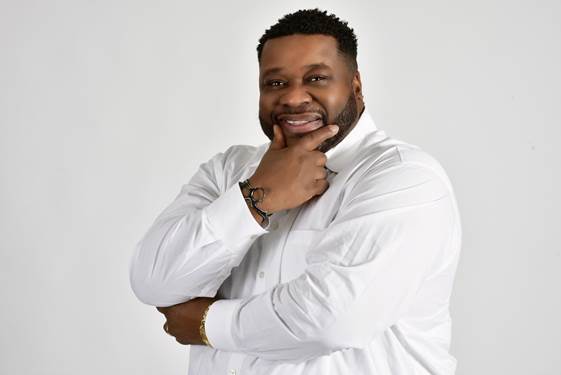
Willie Lightfoot is a Rochester City Councilmember and a former Monroe County Legislator who represented the 27th Legislative District in Monroe County, NY. Lightfoot was appointed to the Monroe County Legislature in 2006 and termed out after three consecutive terms, doing a total of 10 years of service. It is Lightfoot’s belief that the purpose of government is to serve the needs and address the concerns of the community, and not to put up barriers between the bureaucracy and the governed. That is why in his first 100 days in office, Lightfoot held community town hall meetings. These meetings served to cultivate an environment in which our community members were encouraged to share their vision for change in their neighborhoods, build a greater understanding of issues directly affecting their families and homes, and start a dialogue in which all voices are heard. Being a representative of for his community is more than sitting in an office and attending closed door meetings. It is about transparency, shared goals, and building a better Rochester for our families now, and for generations to come.
Lightfoot recently published his first book, The Intersection Between Pain and Purpose. He agreed to answer questions about the book and how he came to write it.
What led you to writeThe Intersection Between Pain and Purpose?
I was led to write this book out of a sermon that I preached at my church Tent revival that I have every year outside. The response from the people was so receptive to this topic that I turned it into a 5 part series that I taught for 5 weeks during Sunday services. As a result of the series, I was inspired to write the book.
One of the first things you write about is the importance of being a good listener. What advice do you have to help people become better listeners?
I believe God gave us two ears and one mouth so we would listen more and talk less. The Bible says to be swift to hear and slow to speak. (James 1:19) My advice is to be intentional about listening. So you have to work at it and make it a habit.
You make a distinction between physical and emotional pain. Now, this is a big question – what can the people of Rochester do to help one another through emotional pain?
I believe we all have to be willing to first be present with ourselves. We have to deal with our own physical and emotional pain first. Like an airplane in an emergency, we have to put our masks on first before we are able to assist others. We have to be more present with each other as well and recognize that we are a hurting community that is deeply wounded and be willing to take ownership of that truth. Then have conversations on what role can we play in healing ourselves and our community.
Throughout the book, you pose questions for readers to reflect on. I’ll ask you one, given your position as a Councilperson and a Pastor: You and your colleagues are often the targets of misinformation and anger. How do you show up every day?
I show up every day with new mercies as a Pastor because if you allow the negative narrative to take over it can consume you and turn you into a very callous person. We as elected officials and leaders are human as well and we are all deeply impacted by the decisions we and others make in these positions. We also are deeply impacted by how we are perceived by the community at large as well. The key is to stay focused on the goals of bettering the quality of life for all and making sure we fight bad (misinformation) with good (accurate information).
You also write about words having power. My work has focused on literacy, especially early literacy and I know you have done some interesting things in your shop. Can you talk a little about the impact of having books in your barber shop and any other work you’re doing to support early and family literacy?
Books in the shop was a program started under the former administration (Mayor Warren). It was an amazing program that got national attention. Allowing families to have access to free culturally appropriate books while waiting on a cut was transformative. I have seen many parents or guardians reading to their children while awaiting a haircut and it makes a difference in a child’s development. The whole experience can be life-changing.
Your book shows the progression people take from pain to purpose, and you write on page 66 “our scars are our testimony and help solidify our purpose.” Can you talk about that?
The Bible says people overcome by the words of their testimony (Revelations 12:11). We all have a story and we all have a testimony of what we have been through and made it out of. Many don’t write a book or have a chance to tell their story on a large scale as others. However, is extremely important that we find safe places to express ourselves and the journeys we have taken. These experiences become a blueprint for whom we become or not become as a result of how we have healed or not healed by the scars of challenges we have faced.
You write about overcoming addiction. What is your typical advice to someone who is struggling with addiction?
My advice for someone who had been there myself is to acknowledge and seek help. You can’t do it alone. You are not alone and others have been there and can help.
The strength of your faith in God shines through the pages of your book. Can you share how your faith drives you to do the work you do?
I would be nothing without my faith. It means everything to me. It keeps me grounded, focused as well as strengthened.
Is there another book in your future?
Yes, I would like to turn this book into a workbook.
Who are some of your favorite authors?
John Bevere and TD Jakes.
What book are you recommending to people right now?
On a personal note, Mr. Lightfoot’s book came to me at a difficult time in my own life. My family has experienced significant losses in the last two years. We lost four family members in 2021, and most recently lost a beloved brother. Mr. Lightfoot’s words have brought me great comfort.
Author bio: After a successful career as a magazine journalist, book reviewer, nonfiction book writer, Charles Salzberg made a move to fulfilling that dream of becoming a novelist when his first novel, Swann’s Last Song, was published and wound up being nominated for a Shamus Award for Best First PI Novel. After four more novels in the Henry Swann series, he wrote three successful stand-alone novels, Devil in the Hole (named one of the best crime novels of 2013 by Suspense magazine) and Second Story Man (nominated for another Shamus and a David Award), and Canary in the Coal Mine. Second Story Man was named winner of the Beverly Hills Book Award. He’s also published three novellas, to be found in the collections Triple Shot,Three Strikes and Third Degree. He still teaches writing in New York City, is a Founding Member of New York Writers Workshop, and is on the boards of PrisonWrites and Mystery Writers of America-NY. His latest novel Man on the Run will be released this April.
You have described “Man on the Run” as being a continuation of your previous work, “Second Story Man,” why did you decide to revisit Francis Hoyt’s story?
When I completed “Second Story Man,” I had no intention of revisiting any of the characters. But after finishing “Canary in the Coal Mine,” and casting around to see what I’d tackle next, I started thinking about Francis Hoyt. Without giving away spoilers, I began to wonder what happens to a character like him after his book ends. I sat with that question for several months before deciding I’d see for myself. At the same time, during the pandemic one of the things I did to pass time was listen to true crime podcasts–a lot of them, especially how they jump into cold cases or cases in the news. I thought it would make perfect sense to create a podcaster–many of them are women–who inadvertently passes through Hoyt’s life. At that point, the seed of a story was planted. But I also became much more crime “literate,” and so a secondary plot line in the novel is based on an actual event.
“Man on the Run” features cutthroat characters who are ambitious, almost to a fault. How do themes of obsession with success comment on a larger societal trend you see in American culture?
I try not to get too political publicly because no matter where you stand you’re going to piss someone off. But that doesn’t mean politics doesn’t affect my fiction. For quite a long time I’ve noticed that Americans are obsessed with winning, about beating and sometimes humiliating opponents. We even had a president who promised so much winning that we’d get tired of it–I doubt that could ever happen. But I think there’s a downside to all that competitiveness, especially the win-at-any-cost attitude. And so that’s how Francis Hoyt came to be. He’s obsessed with being the best and he’ll do anything to win. And so, in both “Second Story Man” and “Man on the Run,” I explore the ramifications of this obsession–and to some extent I think we all have it. But sometimes, I think, it can backfire and cause serious problems for everyone. An exploration of that is a big part of “Man on the Run.”
You’re a board member of Prison Writes, an organization that uses trauma-informed practices to support literacy for incarcerated people. How does your affiliation with this organization inform your writing as a crime author?
I certainly didn’t join PrisonWrites with that in mind, but as it happens working with those who are incarcerated (or recently out of the prison system) does teach me a little about crime, especially motivation. But it’s also incredibly inspirational. Before the pandemic, I was part of a three-person team that went up to the federal facility, Otisville, in upstate New York, to work with incarcerated men. When we got there, I was shocked to see at least forty men sitting in a large gymnasium-like area, all there to learn something about writing–and it was not mandatory. In fact, when we asked, I think almost every one of the men was already doing some kind of writing, especially journaling. I never ask what they’ve done in the past, because I don’t want to pre-judge them in any way, but it is fascinating to hear their stories–it really gives a sense of humanity to each of them and by extension us. It’s the idea that many of us, put in the right circumstances, might be capable of some pretty nasty things.
Tell me more about your experience with PrisonWrites. Have you developed any relationships with the people you’ve met and do you know if they continue to write after leaving prison? Do you have any thoughts on how writing instruction and writing as therapy for students might affect the “school to prison pipeline” in some communities? If readers are interested in PrisonWrites, how do they get involved?
A former student of mine, Jessica Hall, asked me to come down to the Lower East Side and work with at-risk youth. They’d all been in trouble with the law and in order to stay out of youth prison, they had to take part in an after-school program (and part of the deal was that they had to attend school and if they didn’t they’re “sentence” would be adjusted and they’d find themselves remanded to a place in NYC called Spofford, kind of like the training wheels for the more hard-core adult prisons. One day and I was hooked. Working with these teenagers was eye-opening and although they weren’t used to writing, especially the boys (interestingly enough, the girls, many of whom kept journals, were far easier to work with) most of them, once they were convinced that it wasn’t going to be just another class they’d fail, enjoyed it. And when we got the idea of publishing a small magazine with their work, they really got onboard. When we “published” the book, just for family and friends, we decided to have a publication party, and to see the looks on their faces—many of them invited their family—was well worth all the trouble. For many, this was the first time they succeeded in anything “educational,” probably because we set it up so that it was fun, and that there were no losers, just winners. I’d like to think it does work, not all the time, but enough to keep doing it. One of the highlights for me was going up to Otisville, a federal prison (Michael Cohen spent time there), and walking into the gym to find forty men sitting, waiting for us to begin the class. It seems that practically every one of them had taken to writing, whether it be journaling, writing a screenplay or a memoir. It was not only thrilling, but awe-inspiring. And some of those incarcerated men, now back in society, have kept in touch with us, even volunteering to help. There’s a PrisonWrites website, and if you’d like to get involved, just contact Jessica Hall.
Your novel features a true crime podcast host. Did you derive inspiration from real true crime podcasts you’re currently listening to? Any that you’d recommend to readers?
As I said earlier, I came to the true crime podcast pretty late in the game, and only because of Covid. But man, after the first one, I was hooked. I’ve got a lot of favorites, but some of them are “Crimetown,” about the city of Providence, “Someone Knows Something,” “Chameleon,” (all seasons), and anything by Dan Taberski (he doesn’t handle crime per se, but his podcasts are fascinating, especially the one that searches for Richard Simmons, and “The Shrink Next Door.” But there are so many important podcasts, especially one like “In the Dark,” which in one season examines the case of a man who’s been tried four times for the same crime and was sitting on Death Row for a crime he likely didn’t commit (no spoilers here).
What do you hope readers will gain from “Man on the Run”?
That’s a tough one because, to be honest, I don’t think much about what my audiences might get from my writing. In fact, I don’t even think of myself as having an “audience.” But now that I’m asked, I think the first thing I’d want is that people reading it enjoy what they’re reading. And beyond that, maybe get some insight into human behavior. Because for me, crime is all about human behavior and the relationships we have in life and how those relationships sometimes fracture with devastating results. But the one crime I don’t have any (or very little) interest in is serial killers. And for that matter, I don’t write murder mysteries and although there might be a murder in some of my books, it’s always there to tell us something about the characters. And so, most of my books are corpse-free. There are plenty of other crimes to write about. I’ll leave murders to my friends who handle it so well.
What’s next for your writing career?
I’m a little more than a third into my next novel. I’m at the stage where I don’t even have a title for it that I’m happy with–so, I’m just calling it “Searching for Allie,” (but I can pretty much promise you that’ll change.) One of my characters has ESP, he can see things that have happened in the past. But the catch is, only one person in the world, his best friend, knows he has this ability. He’s actually a little afraid of it–it’s an albatross around his neck. And so he constantly avoids any “images” that might come to him–and so when his best friend’s college-age daughter comes up missing and he’s asked to help, which means like it or not, he has to deal with this “thing” he has. I don’t write with an outline–I never know where the story is going–so I’m afraid I can’t give you a plot summary.
Who are some of your favorite authors? Do you draw inspiration from them in your own writing?
I’ve got so many favorite authors, all of whom provided inspiration. Vladimir Nabokov, Saul Bellow, Bernard Malamud, Norman Mailer, Philip Roth among them. These are the writers who “taught” me how to write, how to appreciate good writing, how to structure a novel and write compelling characters and dialogue. And notice there aren’t any pure crime writers amongst them. But if you look a little closer, you’ll Nabokov’s Lolita, one of my favorites, is really a crime novel—older man fixates on 12-year-old girl, kidnaps her and takes her across state lines. And then there’s the Executioner’s Song, about the life of killer Gary Gilmore. Not that I don’t admire crime writers like Dashiell Hammett (my favorite), or Raymond Chandler, right up there, or Ross MacDonald. I read them all and they’re the ones who taught me how to write a crime novel.
Besides crime fiction, what other genres do you read?
I pretty much read anything and everything except for Sci-fi and romance. But even then, if someone recommends reading something in those genres, I’ll give it a try. When I’m in the middle of writing fiction, I try not to read other fiction—sticking to nonfiction. For good reason. I’m either afraid that if it’s really good, I’ll get discouraged, thinking how could I possibly rite anything better? Or, I’m afraid somehow I’ll be influenced by someone else’s style.
What are you reading right now?
I’m almost always reading two, three, sometimes even four books at the same time and, on my mood at any particular time. Right now, I’ve got Peter Blauner’s latest novel, Picture in the Sand,Watergate, by Garrett M. Graff, Slow Horses, by Mick Herron, and Sleepless City, by my friend Reed Farrel Coleman.
What one book do you recommend over and over?
Gosh, there are so many, too many to choose, so I’ll just mention a few: In Cold Blood, by Truman Capote, Lolita, by Vladimir Nabokov, Seize the Day, by Saul Bellow, and Desperadoes, by Ron Hansen.



 It's All About the Book