Fairytales, Fantasy, Folktales, Young Adult

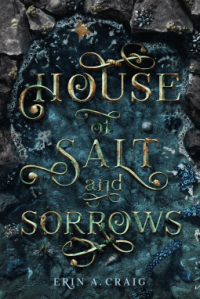
House of Salt & Sorrow by Erin Craig


cover157025-mediumHouse of Salt & Sorrow by Erin Craig

Folktales have been told and retold for centuries, and I am always up for reading something new. Often, the retellings are interesting but not very original. Erin Craig, though, has produced an imaginative, lovely, wholly original retelling of the Twelve Dancing Princesses which takes the kernel of the old story and builds a whole new world peopled by fascinating characters and customs.

The “Thaumas Dozen” is as interesting a group as I can remember from my reading. Twelve sisters, all different in their own ways with very different wishes for their futures. Tragedy strikes the family again and again as first their mother then sisters begin to die tragically. The family, it is whispered, is cursed, with the girls being described by hoped-for suitors as “lovely as a bouquet of belladonna.”

Two sisters, Annaleigh and Verity, know something is very wrong and each works towards solving the riddle of their “curse.” Throw in the wicked (is she or isn’t she?) stepmother, an enchanted father, and all the glorious wickedness of Faeryland and you have a tale that will delight and capture your senses.

This will appeal to teens and adults alike, and Erin Craig is on track to take a place next to Marissa Meyer, Naomi Novik, and Sarah Maas.

Publication Date: August 6, 2019
Publisher: Random House/Delacorte
Thanks to Netgalley for the review copy

READO

READO Update


We’ve added a couple new READO boards to the mix in the MCLS Staff Reading Challenge, and I thought you might like to see them. Staff have been hard at work reading, so I’ll also share some of the books completed so far.

IMG_0770IMG_0771

Micro Reviews

February Micro-Reviews


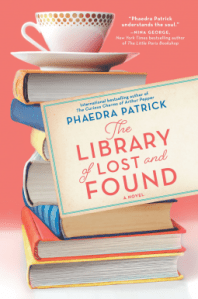
2ED6F538-8B91-493B-9F3B-DEC5DB1984D6The Library of Lost and Found by Phaedra Patrick – There have been so many books out lately that revolve around things that are lost and found and I didn’t expect a much different story here. Silly me. Phaedra Patrick has given us a story about a middle-aged woman who never says no…until she does. What happens next is one of the most poignant stories I’ve read in a long time.

Martha’s whole life has been shaped by a single incident from her childhood which she knew nothing about, until a mysterious book full of her own childhood stories, with a dedication written by her grandmother, shows up out of the blue at her library. That the stories are her own, written as a child, is one thing, but the dedication is dated three years *after* her grandmother supposedly died. This mystery sets off a string of explosions in Martha’s life, leading her on an unforgettable and sometimes painful journey.

Somewhat reminiscent of a favorite from last year (Eleanor Oliphant is Completely Fine) this one will leave you with a bunch of crumpled tissues and stuffy nose, but also a soaring spirit. Book clubs, take note. This is a sure hit for your monthly meetings.

Publication Date: March 26, 2019
Publisher: Harlequin
Thanks to Netgalley for the review copy

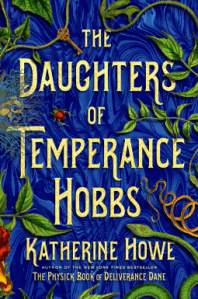
13896A93-B0D4-441A-B853-CC6334F53416Daughters of Temperance Hobbs by Katherine Howe – Howe’s Physick Book of Deliverance Dane was a favorite of mine in 2009 so I was thrilled to get this ARC, which continues the story of Connie Goodwin and her search for truth in her past. Howe’s writing is wonderful as usual, and the story is as captivating as I’ve come to expect from the author. The primary plot line is somewhat reminiscent of Practical Magic, but Connie’s relationships with both the past and present make this one well worth reading. Howe writes with an engaging style that makes the reader feel as though you know the characters. As I read, I could feel Connie’s rising panic about her child and Sam. Her drive to safeguard her family forces her to reopen old wounds and the scene with her former mentor Manning Chilton was chilling.

I was delighted to see Connie’s mother, Grace, play a larger role here and develop into a very interesting character. The Dane lineage becomes much clearer here, and Grace becomes a more well-rounded figure of power. New character Esperanza is also a welcome addition, bringing yet another strand of “women’s work” to the bigger story of cunning women.

Publication Date: June 25, 2019
Publisher: Henry Holt & Co.
Thanks to Netgalley for the review copy

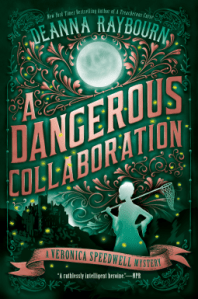
839B253E-B026-455D-9D02-CC129100BDB2A Dangerous Collaboration by Deanna Raybourn – Raybourn has delivered another rollicking good mystery in the Veronica Speedwell series. The flirtatious relationship between Veronica and Stoker continues and moves into serious territory, all the while they are working to solve a clever and villainous mystery in a spooky castle on an island off the Cornish coast, complete with a poison garden and a raft of prevaricating people. Really, all you need for a few hours of fun reading! With the popularity of Victorian era TV shows, I think this one would make an excellent show!

Publication Date: March 12, 2019
Publisher: Berkley Publishing Group
Thanks to Netgalley for the review copy

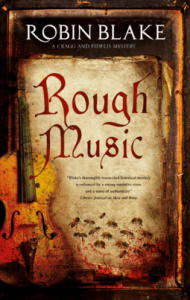
89B3A1FD-7C09-4939-BFC5-62D927132855Rough Music by Robin Blake – Coming into a series not previously read can be difficult, but that is not the case here. Like Anne Perry’s mysteries, this one stands alone while featuring characters that have appeared in previous novels. The writing and plot here are what you’d expect for a story set in this time period – it’s rough and sometimes shocking. I admit that the prologue, which featured a husband and wife being publicly humiliated on a “stang ride,” was graphic enough that I put the book away for a few days and debated whether to finish. However, I did go back and finish and found an interesting and clever plot and very appealing main characters. I enjoyed Titus Cragg very much, and would recommend this for libraries in which Blake’s previous Cragg stories have been popular.

Publication Date: April 1, 2019
Publisher: Severn House
Thanks to Netgalley for the review copy

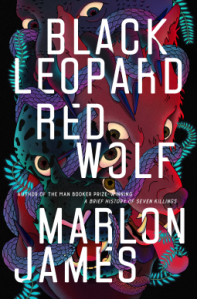
9EFD418D-AEAE-4D84-ADE4-B8AFF26179FABlack Leopard Red Wolf by Marlon James – Overall, not my cup of tea, but I recognize skillful writing and storytelling when I see it. This will be a welcome addition to library collections and will appeal to adults who enjoy a blend of fantasy and mystery with a good dose of mythology. However, it is not for the faint-hearted.

Publication Date: February 5, 2019
Publisher: Penguin Group, Riverhead Books
Thanks to Netgalley for the review copy

General, Grown Ups, Non Fiction

Palaces for the People by Eric Klinenberg


palacesA few months ago, sociologist Eric Klinenberg wrote an opinion piece for the New York Times called “To Restore Civil Society, Start with the Library” and subsequently published the book Palaces for the People which describes his work around the concept of social infrastructure.

News of both publications immediately started flowing into my email box and social media feeds. The concept of public libraries as social infrastructure captured the attention of many people. As I read Klinenberg’s book, I recognized many of the concepts library leaders have for decades struggled to communicate to funders and stakeholders. Libraries aren’t always thought of as “essential services” when municipalities are facing difficult budget years, so having a different way of describing what libraries do as “infrastructure” is very valuable.

Klinenberg defines social infrastructure as “physical conditions that determine whether social capital develops and whether human relationships and connections are formed.” Simply put, it refers to places or things that bring people together, that help create a community. Libraries are an example. What happens when people gather in these places? People who are very different from each other come together and become part of a community. They very likely have differing political and religious views, support different sports teams, watch different television shows, or read different kinds of book. The *place* brings them together.

In his book, Klinenberg primarily gives examples of how people benefit from the social infrastructure created in certain places. He talks a lot about neighborhoods and opens Palaces for the People with a data story he collected on a deadly heatwave in Chicago. More people died during that event in neighborhoods he describes as “forgotten.” These are neighborhoods where there is little to no interaction among the people who live there and where neighbors don’t know each other because there are no places for them to gather. There were no relationships bolstered by community spaces so no one checked on each other to make sure people were okay during the heatwave.

He writes: “When hard infrastructure fails…it’s the softer social infrastructure that determines our fate.”

Klinenberg singles out public libraries as the ultimate example of social infrastructure that works. He provides example after example of how people connect at libraries. One woman he interviewed described the library as a “place of permission” where you can follow your own interests and not be pushed in a certain direction. Libraries are a place that is judgement free, where you can explore whatever interests you.

Libraries in Monroe County have a long and rich history, and most of our mayors and town supervisors and other entities responsible for funding our libraries understand the role libraries play in community and are committed to keeping our doors open.

Years ago, when I worked at the Ogden Library in Spencerport, I was doing some research for a book. I learned that when the Town of Ogden was founded in 1815, the first three institutions created were a church, a school, and a library.

Imagine that group of pioneers, who had literally cut their way west from Connecticut and Massachusetts through untamed wilderness, arriving in Ogden, building their homes, then setting about creating a community. I think it says a lot about those pioneers that they created a library in the middle of the wilderness. They knew that a library would provide something valuable and necessary in their new community.

Today, public libraries all over the world are providing social infrastructure for their communities. In Monroe County, there are dozens of examples of the library creating and enabling communities to form.

People who live in Rochester’s 19th Ward point to the Arnett Branch as an anchor in their community. The library provides a safe space for children to gather after school where they are supervised, fed, and given homework assistance until picked up by their parents after work is done for the day. Adults can apply for jobs, or participate in a writing group. Teens learn about college and work opportunities. All ages come to play. A local artist, Richmond Futch, has created beautiful murals on the exterior of the library, which only reinforces the role of the library as a community anchor and has made the library a selfie destination.

arnett

The Phillis Wheatley Community Library is located at the corner of Ford Street and Dr. Samuel McCree Way in Rochester. In 2017, a community project called the Storywalk was completed there, where children and families created a story that is told through kiosks alongside the building and enhanced by gorgeous sidewalk murals that were painted by community members. This project brought dozens of people together and gave them ownership of the library. The people who live nearby consider library staff as family and the library as home. Recently, I was present at Wheatley when there was a shooting outside and several bullets hit the windows of the library. The library was locked down by police with no one in or out. Once the doors opened again, I was astonished and deeply moved by the crowd of neighbors who rushed in and enveloped staff members in hugs, making sure they were okay. The library staff and neighbors are like family.

wheatley

The Monroe Branch recently started a new service that relies on the kindness of strangers. They took an empty book cart and put some canned food and couple loaves of bread on it with a sign that reads “Take what you need. Leave what you want.” It is available for anyone who is in need and gives community members an opportunity to give to those who are in need. This is the result of staff noticing an increase in the number of homeless and hungry people taking shelter in the library.

monroe

Perhaps one of the most powerful aspects of social infrastructure when it is applied to libraries is that library space requires people to confront radical differences in a shared space. Nowhere is that most evident than at the Central Library of Rochester and Monroe County. At Central you are guaranteed to run into to someone who is vastly different from you. A person might be homeless, or of a different ethnicity, or transgender, someone with mental health issues, lawyers, doctors, techies, business people, young mothers, teens, grandparents, and so on.

Everyone is welcome there, and we attempt to provide the right service at the right time to the right person. When Midtown closed in 2008, the Central Library became the only public place downtown with clean restrooms, and where it’s warm in the winter and cool in the summer. That meant we had a great influx of homeless and transient people who no longer had Midtown as a hangout. Instead of viewing these newcomers as a problem, we adapted our services to help them. We created Health Central on the 3rd floor where people who need help can get connected to healthcare, housing, and legal assistance. We have Nurse Barb on duty a couple days a week. She’s a retired nurse who volunteers her time to take vitals and counsel people on their health needs. Central is also now a regular stop for mobile health services providing dental care and mammograms.

I am sometimes confronted with people who resent the inclusiveness at Central and see it as threatening. I have had librarians from suburban libraries say they will never attend another training session at Central because it’s too dangerous. I’ve had an older gentleman tell me he doesn’t understand why we allow “young thugs” in the library, and have had people voice objections about sharing space with the homeless. These reactions are based in fear of the unknown, and sometimes people are willing to learn, sometimes not. The people who are comfortable with the stew of visitors to Central outnumber those who are afraid, as seen in our annual attendance numbers, which top 600,000 visits. More visits than all our sports stadiums, more than Strong Museum, more than the Zoo.

How does all this fit with the concept of social infrastructure?

Libraries are adapting services in response to community needs and activities. We are creating community. Most libraries do that very deliberately, but libraries have also shown up during times of crisis.

When Superstorm Sandy hit the downstate region, the NYC boroughs were devastated. In Queens, many libraries were flooded, and some destroyed. Within days of the storm, Queens librarians had opened libraries and became disaster centers in their neighborhoods, handing out food & clothing, providing electricity for people to charge phones, and doing storytimes in makeshift encampments to entertain weary and bored children.

When riots erupted in Ferguson and Baltimore, libraries stayed open and provided safe spaces for neighbors afraid for their lives. And then those libraries turned around and started discussions on race and healing, providing a safe space for people to have hard conversations.

Libraries provide valuable social infrastructure in a community, not only by the things they provide, but by the experiences offered and the people who offer them. When the Rochester Public Library conducted a study of branch facilities and services last year, the overwhelming response from community members when asked what they liked the most about their library was….STAFF. Our staff are our lifeblood. It is through them that community is created.

Visiting a library will remind you that there are different people with different ideas out there, and that is not a bad thing. Libraries allow communities to form and reform organically. New parents connect at baby storytimes, people looking for work help each other out, kids come together to learn about any number of things. Adults come together to discuss books, for craft classes, or to build with legos and end up forming new friendships that extend outside the library.

There is emerging research on the alienating effect of the internet on human behavior. Anyone who is on any social media platform has probably experienced a “troll” – someone who deliberately says nasty things to elicit a negative response. The relative anonymity of online communication has provided an outlet for the worst in us. It’s easy to say something hurtful when you don’t have to look someone in the eye. I see people looking for alternatives, and they are looking back into their communities for opportunities to connect in real life with other people. What better place to do that than the public library?

Social infrastructure – real community – provides an alternative to that kind of negativity. Klinenberg ends his books with this: “We need smart civil engineering to fix the critical networks that are failing, but we also need to engineer civility in societies that are at risk of breaking apart.” Libraries can provide a conduit for growing that civility.
Uncategorized

Reader Profile – Jessica Lewis


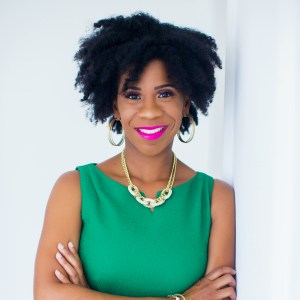
Jessica Lewis headshot1Jessica Lewis is the Communications Specialist for ROC the Future and Principal Publicist & Owner of LáLew Public Relations. She is a 2018 ATHENA Award Young Professional finalist and a Woman to Watch for the Democrat & Chronicle Newspaper. Jessica is a successful entrepreneur, owning the fastest growing, Black-owned public relations firm in Rochester, New York. Jessica is also the host of Ujamaa Rising, a television show that features Black-owned businesses and real-life stories of entrepreneurs. Jessica received her Bachelor’s degree from Buffalo State College in Social Studies Education grades 7-12 and a Master’s degree in Teaching and Curriculum from the Margaret Warner Graduate School of Education at the University of Rochester. Jessica holds membership in the Rochester Association of Black Journalists, the Democrat & Chronicle Young Professionals Advisory Council and the Theta Omega Sigma Alumnae Chapter of Sigma Gamma Rho Sorority, Inc.

What are you reading now?
I just started reading the Autobiography of Assata Shakur.

Are you a fiction or non-fiction reader?
I like both.

What book would you love to see made into a movie? Who would play the lead role?
I would love the Autobiography of Assata Shakur to be made into a movie. I’m only on the 3rd chapter and am fascinated by her life story. It’s striking how her experiences as a child living in NYC in the 50s and 60s attending a predominantly white school mirrors the experience I had in the 90’s.

What book are you recommending that everyone read right now?
Post Traumatic Slave Syndrome by Dr. Joy DeGruy and Stamped from the Beginning by Ibram X. Kendi.

What book changed your life, or changed how you view the world? In what way?
I would say Post Traumatic Slave Syndrome by Dr. Joy DeGruy and Stamped from the Beginning by Ibram X. Kendi. Those two books opened my mind to a new perspective on race relations in America. I was educated in predominantly white institutions all my life. In school we learned about slavery, then jumped to the Civil Rights Movement, only learning about Dr. Martin Luther King, Jr., Rosa Parks and maybe a few others. We never delved deep into what actually happened during slavery and the ramifications of slavery such as laws enacted by the federal government which instituted racist policies that still have an effect today. Post Traumatic Slave Syndrome dives deep into these issues and Stamped from the Beginning gives insight into how racist ideas spread from Europe to American and how anti-black thinking has entrenched itself in the fabric of American society. The book also talks about the role of media and how media perpetuates stereotypes only further influencing the minds of the American people (exacerbating bias) which then effects behavior and subsequent actions.

Does reading influence your decision-making process?
Yes, it does because I’ve been enlightened by several books that I’ve read and now am not ignorant to certain things like before.

Are you a “finisher” or do stop reading a book if you’re not connecting with it?
I think I’m a stopper. If a book is uninteresting I’ll just put it down.

Why do you read?
I read to learn and to open my eyes to things I did not have knowledge about.

The desert island question – What 5 books would you have to have with you if you were stranded on a desert island?
I would say Becoming by Michelle Obama, Outliers and The Tipping Point by Malcolm Gladwell, Lean In by Sheryl Sandberg and Year of Yes by Shonda Rhimes.

Do you ever read the end of a book first? Why or why not?
No, but now I’m more intentional about reading the Preface and Foreword.

Would you rather be your favorite author or your favorite character?
I’d like to be my favorite author because I’d like to be skilled enough to tell a story in a way that’s compelling and interesting.

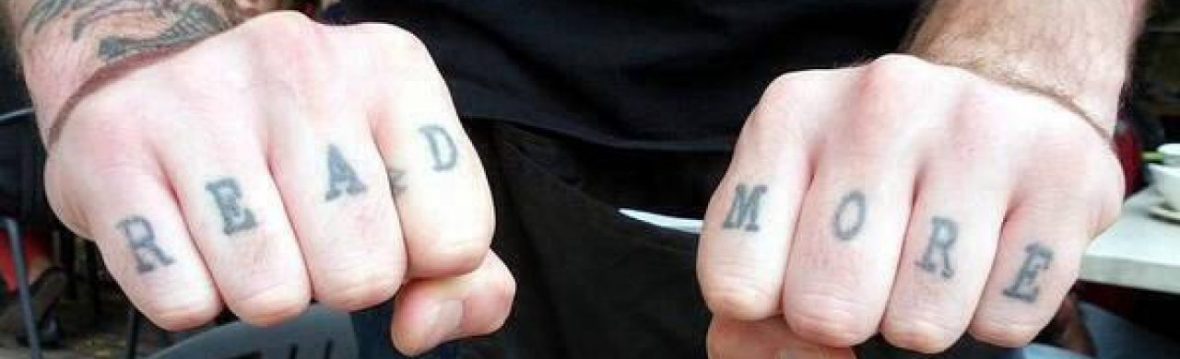
If you were to get a bookish tattoo, what would it be?
I would get a tattoo of my favorite passage or scripture. Maybe in a nice script font.

Author Spotlight, Book Tour, Italy Book Tour

Author Spotlight: Crystal King


Crystal KingCrystal King is an author, culinary enthusiast, and marketing expert. Her writing is fueled by a love of history and a passion for the food, language, and culture of Italy. She has taught classes in writing, creativity, and social media at several universities including Harvard Extension School and Boston University, as well as at GrubStreet, one of the leading creative writing centers in the US.
A Pushcart Prize–nominated poet and former co-editor of the online literary arts journal Plum Ruby Review, Crystal received her MA in critical and creative thinking from UMass Boston, where she developed a series of exercises and writing prompts to help fiction writers in medias res. She resides in Boston but considers Italy her next great love after her husband, Joe, and their two cats, Nero and Merlin. She is the author of Feast of Sorrow and The Chef’s Secret.

What genre do you write and why?
I write historical fiction. It’s something I never thought I would write, until suddenly there I was writing a book about the historical past. But I don’t think I’ll always write historical fiction. I have several shelved fantasy novels that I hope I can get back to someday. I also have a couple ideas for some non-fiction books. I think that the publishing industry likes to have an author write in only one genre but I hope that I won’t be limited to that in my writing career.

What or who inspired you to first write? Which authors have influenced you?
I was a very early reader and that led me to begin writing when I was very young, at the age of five or so. I had great, encouraging teachers. I remember being chosen by my school to attend a young writers conference when I was ten. The author speaking was Madeleine L’Engle and I was so excited because I loved her books. My influences over the years have been eclectic, ranging from poets like Anne Carson and Czeslaw Milosz to authors such as Stephen King, Margaret Atwood, Ursula K. LeGuin, Anais Nin and MFK Fisher. I also love reading the classics such as Tacitus, Virgil, Herodotus, Dante and Shakespeare.

Do you ever cook any of the recipes described in your book?
Yes! That’s one of the most exciting things to me about exploring the lives of Italian culinary heroes. I think to really know my characters I have to cook the foods that they would have cooked or at least make a grand attempt to. The recipes aren’t always easy to decipher, and many of the ingredients are not as familiar today to a modern palate. Or they are things we just don’t eat any more. For example, peacock, crane, calves eyeballs, hedgehog, or porcupine. But there are many things in the 1570 cookbook that Bartolomeo Scappi wrote that we would find delicious, including apple crostata, braised beef, mushroom soup, fritters, and so much more. I include many of these recipes in The Chef’s Secret Companion cookbook, which can be found here. And if you are interested in ancient Roman food, check out my page all about the cuisine of that time, and you can also download the Feast of Sorrow companion cookbook too.

Do you write every day?
I don’t write every day although when I have made a practice of writing every day, I find that the book really sits with me and I can write quite fast. But since I have a day job and a lot of other activities it sometimes hard for me to write on top of all the other work I’ve done during that day. For the most part, I tend to write on the weekends. Usually I will clear all my Sundays and write several hours on that day.

Do you have a writing group?
I do. It’s a group of women that I’ve been meeting with for 12 or 13 years now. We meet every two weeks and usually go over a few chapters of whoever has chapters to share. They have helped me hack apart and reassemble all of my novels countless times. We call ourselves the Salt + Radish Writers because of our tradition of having salt, butter and radishes to nosh on during our yearly writing retreats in Maine, but also because salt is flavor, radishes are nourishment and those are things that we deliver to each other, and almost always, over a meal.

Name a quirky thing you like to do.
I don’t think this is actually terribly quirky but most people are surprised to know that I love video games. I tend to like games with rich story arcs, usually sci-fi or fantasy. My husband got me an Oculus Rift for Christmas and I have really had a lot of fun with that exploring virtual worlds. I’m super excited to see where that technology is going to take us in the next 5 to 10 years!

Book Tour, Historical, Italy Book Tour, Mystery

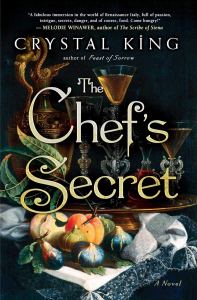
The Chef’s Secret by Crystal King


The Chef's SecretA captivating novel of Renaissance Italy detailing the mysterious life of Bartolomeo Scappi, the legendary chef to several popes and author of one of the bestselling cookbooks of all time, and the nephew who sets out to discover his late uncle’s secrets—including the identity of the noblewoman Bartolomeo loved until he died.
When Bartolomeo Scappi dies in 1577, he leaves his vast estate—properties, money, and his position—to his nephew and apprentice Giovanni. He also gives Giovanni the keys to two strongboxes and strict instructions to burn their contents. Despite Scappi’s dire warning that the information concealed in those boxes could put Giovanni’s life and others at risk, Giovanni is compelled to learn his uncle’s secrets. He undertakes the arduous task of decoding Scappi’s journals and uncovers a history of deception, betrayal, and murder—all to protect an illicit love affair.

As Giovanni pieces together the details of Scappi’s past, he must contend with two rivals who have joined forces—his brother Cesare and Scappi’s former protégé, Domenico Romoli, who will do anything to get his hands on the late chef’s recipes.

With luscious prose that captures the full scale of the sumptuous feasts for which Scappi was known, The Chef’s Secret serves up power, intrigue, and passion, bringing Renaissance Italy to life in a delectable fashion.

Book Details:

  • Book Title: The Chef’s Secret by Crystal King
  • Category: Adult fiction, 352 pages
  • Genre: Historical Fiction
  • Publisher: Atria/Simon & Schuster
  • Release date: Feb 12, 2019
  • Tour dates: Feb 11 to 28, 2019
  • Content Rating: R (for a couple of explicit, but loving, sex scenes (no abuse or rape) and minor curse words)

To follow the tour, please visit Crystal King’s page on Italy Book Tours.

Buy the Book:
 

Amazon ~ Barnes & Noble ~ Indiebound ~Books-a-Million ~ Kobo ~ iTunesGoogle Play ~ Book Depository

 
Meet the Author:

Crystal King Crystal King is an author, culinary enthusiast, and marketing expert. Her writing is fueled by a love of history and a passion for the food, language, and culture of Italy. She has taught classes in writing, creativity, and social media at several universities including Harvard Extension School and Boston University, as well as at GrubStreet, one of the leading creative writing centers in the US.

A Pushcart Prize–nominated poet and former co-editor of the online literary arts journal Plum Ruby Review, Crystal received her MA in critical and creative thinking from UMass Boston, where she developed a series of exercises and writing prompts to help fiction writers in medias res. She resides in Boston but considers Italy her next great love after her husband, Joe, and their two cats, Nero and Merlin. She is the author of Feast of Sorrow.

Connect with the author: Website ~ Twitter ~ Facebook ~ Pinterest ~ Instagram

Enter the Giveaway!
Ends March 7, 2019

a Rafflecopter giveaway

Italy Book Tours Logo official
Non Fiction

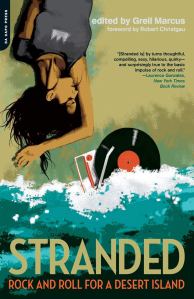
Stranded by Greil Marcus


stranded“He triggers memories like you were a jukebox and he was the man with all the quarters.”
This quote comes from an amazing book that I have just rediscovered: Stranded: Rock & Roll for a Desert Island by Greil Marcus.

Sometime in the 70’s, Marcus decided that it would be really cool to ask music critics and performers what music they would absolutely have to have if they were stranded on a desert island. This book is a compilation of those answers, and it contains some brilliant essays on rock and roll and the people who made it part of the fabric of our lives.

Most notable is the astonishing essay by Ariel Swartley, “The Wild, the Innocent and the E Street Shuffle.” She dissects Springsteen and his band at a time when they were at their most raw. This was before The River (quite possibly the most perfect album ever made) and Born in the U.S.A., back when Bruce and the boys were still those grungy “boy-prophets” from the streets of New Jersey, before Bruce married and divorced a super-model, before he had kids and moved to Beverly Hills, before he became kind of ordinary.

The whole book is filled with essays like Swartley’s, and it is a psychadelic memory romp that includes music as diverse as the Ronettes and the New York Dolls. If you were alive and listening in the 70’s, you need to read this book. It will make you remember what it was like to feel the music you listened to.

It’s believed that certain smells can trigger strong memories. I believe the same is true for certain songs. There are songs that always take me back to a certain time, place or person. For instance, Carly Simon’s You’re So Vain takes me back to the parking lot of Grants on Jefferson Road, Rochester, NY oh, maybe 1973. It was the first time I heard a song that made me want to stay in the car and listen instead of heading inside with my mother. Then there’s Peter Gabriel’s Solsbury Hill, which transports me to 1983, and the Journey’s End bar in Canton, NY with Tom Wanamaker, Jeni Armeson, Mary Foster, Liz Yeomans, Mike Collins, and Alan Haberstock. And of course, Genesis’ Follow You, Follow Me always puts me in 1985 at the bar of the Holiday Inn at the Airport in Rochester, with Cosmo. Very likely the night we fell in love, so this is a suitable post for Valentine’s Day!