
 “Writing itself was a magical act in which imagination altered reality and gave form to power.”
This is how Hoffman describes the power found in the writing of women, in this case the Owens women who we first came to know in Practical Magic. That book told the story of Sally and Gillian Owens and how they broke the curse on their family which made it impossible for them to love someone without tragedy. This book goes back two generations before Sally and Gillian, telling the stories of Franny, Jet (the Aunts), and Vincent (the Grandfather).
Hoffman builds a bigger world where there are Owens women and men all over the world, but the nucleus of the family remains on Magnolia Street in Massachusetts. We learn more about Maria Owens, caster of the infamous curse, and how she loved and was betrayed by an equally infamous witch-hunter in the 17th century. The focus here, though, is the three Owens siblings – Franny, Jet, and Vincent – and their lives in New York City through the 1950s-1960’s.
When we first meet the trio, they have no idea they’re witches. Their parents have kept the knowledge from them, trying to ensure they will live normal lives. Franny is the scientist, Jet the poet, and Vincent the musician. While their lives seem normal enough, they all know there is something different and special about themselves and their family. Exactly what that specialness is comes to light when they go to Massachusetts to spend the summer with Aunt Isabelle, when they learn about their magical heritage. They spend the next two decades experiencing great tragedy, running away from love, and participating in the major events of the time – Stonewall, Vietnam, the Summer of Love. Hoffman neatly connects Rules of Magic with Practical Magic at the very end, and I was left thinking about who will be cast in the film that will surely follow.
All the usual things a reader expects from Alice Hoffman are here – lovely writing, strong female characters, a solid and engaging story – so this will definitely be one of the hot books this Fall. I enjoyed learning about the Owens family history, and found the primary trio of characters both charming and exasperating. This was an advanced review copy, so I am sure there will be some editing, which is needed. There are parts of the story which could move a little faster, and I think the ages for Sally & Gillian at the end are too young for their behavior and language, but those are nit-picky things that truly don’t affect the readability factor of this wonderful story. It’s not necessary to have read (or to re-read) Practical Magic before you read this one, but I guarantee you will want to read it after you finish.
Publication Date: October 10, 2017
Published by Simon & Schuster
Thanks to NetGalley for the advanced review copy

 I fell in love with Eowyn Ivey’s work when I read her debut novel,
  David Tanis Market Cooking: Recipes & Revelations, Ingredient by Ingredient by David Tanis
 Brave Red, Smart Frog: A New Book of Old Tales by Emily Jenkins
 Uncommon Type by Tom Hanks
 Healthy Meal Prep by Stephanie Tornatore and Adam Bannon
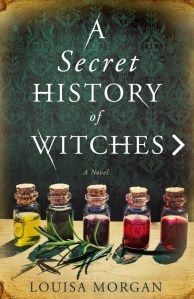 The concept of women’s power being rooted in magic has become a regular theme in recent fiction, and The Secret History of Witches adds to that growing genre. Louisa Morgan has created a captivating tale of six generations of Romani witches, women whose talents include “simples” like healing potions, knowledge of the weather, affinity for animals or growing things, and, most importantly, seeing the future.
 In the 19th century, the government of Canada, like the United States, began a systematic assault on Indigenous People. Land was confiscated. Rules and laws were established that controlled where and when Indigenous People could live, work, and travel. Perhaps the most insidious, disgusting action was the establishment of compulsory schools for Indigenous children, who were removed from their families, starved, abused, and indoctrinated into Christianity and the white way of life.
 Elizabeth Stuart (1596-1662), daughter of James VI, wife of Frederick V, known as the Winter Queen due to her single winter as Queen of Bohemia. Not a familiar queen to most, but an engaging subject in this entertaining piece of semi-historical fiction from Nicola Cornick which blends history, mystery, mysticism, and romance.
 Part mystery, part psychic adventure, part romance – The Fortune Teller has it all. The story opens with a death, that of Marcel Bossard, renowned collector of rare books and manuscripts. That disturbing scene is followed by our introduction to Semele Cavnow, an employee of the auction firm hired to sell the Bossard collection. As she begins her work, she feels an immediate, unusual attraction to Bossard’s son, Theo, which only intensifies as she spends more time in the Bossard home in Switzerland. Eventually, she finds a hidden book, very ancient and very mysterious, but not as mysterious as the handwritten note left in the book by Marcel Bossard, which is addressed specifically to her.
 It's All About the Book