

Update 6/12/17:
While I never did get past the chapter on Genius, I have to say that I have a solid appreciation for the content of this book. While it was a heavy read, the content, in its simplest form, has come to change the way I think about work. Described as simply as possible, you play infinite games just for the joy of playing, while you play finite games to win. I didn’t truly understand this until I went through the altMBA and carefully and joyously examined why I do what I do. During those 4 weeks, I was encouraged to dig deeper and slide to the edges of everything I know. I discovered that, while I played a finite game for most of my career (meaning, I’ve worked because I wanted to “win” my way to a position of influence), I have been playing an infinite game for a long time. I do what I do because I love the play.
The altMBA also gave me a new perspective on philosophy, which I have shunned for years. I spent 4 weeks thinking deeply about so many things. The difference between my early experiences with philosophy and my altMBA experience is that, while both involved hanging out with smart people having complex conversations, the altMBA required me to ship 12 projects, or, in other words, to get shit done. In the weeks since I finished my altMBA sprint, it seems I can’t stop getting shit done!
If you’re feeling ready to think deeply about what game you’re playing, read Finite & Infinite Games, then let’s talk.
Earlier Post:
I am enrolled in this intense, mind-expanding online course called altMBA. It starts at the end of April and is produced by author Seth Godin. I am anticipating a life-changing experience, or at least a month of utter craziness.
I received a big box of course materials two weeks ago and dove right in to reading all the books. I started with this one because, you know, PLAY! I had high expectations that were immediately dashed as I realized that this is, at its heart, a philosophical treatise. A six month stint with Aristotle in the early 90’s caused me to hate philosophy with the heat of a thousand suns. However, because this book is part of the altMBA course, I kept at it and, truthfully, found some really interesting nuggets that made me underline, write notes, and really think.
Until I got the the chapter on genius. Dude, I could not even get past the first page of that chapter. I even tried reading while listening to one of those “Deep Focus” playlists from Spotify. No go.
Maybe I’m just too old for this kind of philosophy. It was cool in college to sit around and debate the great philosophers. Now, I just find them all pretentious bull-shitters who lived their lives ambiguously. Make a decision. Take a side. Get shit done.
I think I read enough to grasp the concept Godin wanted to convey for the course. We’ll see.
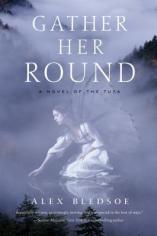 I have written before of my love for Alex Bledsoe’s Tufa books. I swear, I become more enamored with Cloud County and the Tufa with every entry in this series. Bledsoe’s latest,
 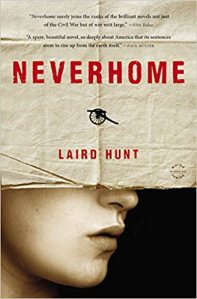 It seems like there’s been a proliferation of novels in recent years that feature women who masqueraded as men so they could fight in a war. Some are better than others, and I will mark Neverhome by Laird Hunt as one of the better efforts.
 “A dream turned inside out. That was California.” Helen Rice, the protagonist in Anita Mishook’s masterful debut novel, Helen, certainly finds truth in this statement. We first meet Helen as she travels from New York to California to join her older sister and her family in lovely Glendale, California. The sisters, Polish Jews orphaned jointly by the Great War and influenza, survived great hardship and made it to New York, where Sarah labored to ensure Helen acquired the best education possible. Now an adult, Helen finds herself drifting and decides to join Sarah, her husband Harry, and their two children in the land of golden opportunity.
 Fablehaven fans, rejoice! Kendra and Seth are back and as badass as ever!
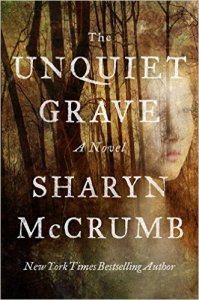 Reading an ARC is always a crapshoot. The reader has to be flexible and overlook things like excessive description, disjointed story arcs & grammatical errors and concentrate on the story. In Sharyn McCrumb’s
  The Duncan Kincaid/Gemma James detective series by Deborah Crombie became a go-to for me when my favorite British detective series, Martha Grimes’ Richard Jury, petered out. I found Crombie’s writing similar to Grimes, but with a fresher, modern style. Crombie’s development of the Kincaid and James characters has always been nicely handled, with just the right amount of mystery, suspense, and spice, and the crime stories have been clever and well-plotted. So, you may presume that I have looked forward to the release of Garden of Lamentations for awhile.
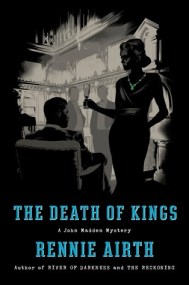 Rennie Airth’s first novel featuring Scotland Yard detective John Madden,River of Darkness, grabbed me by the throat in the first chapter and never let go. I’ve been a fan of the series ever since. The Death of Kings is the 5th Madden book, and confirms what I began to suspect by the 4th book: Airth’s intricate, suspenseful, brain-crushing storytelling has followed an arc from edgy-detective-damaged-in-the-Great-War to retired-detective-turned-farmer-and-doting-father.
 First in the Oxford Medieval Mysteries series,
  It's All About the Book