General

The Big Read Comes to Rochester


A few years ago, the NEA did a survey on the reading habits of Americans, which concluded that literary reading has declined rapidly in the past few decades. In response to that survey, the NEA developed the Big Read grants program which provides funding and programming materials for communities that will implement a regional reading program using selected titles.

Rochester and Monroe County are the recipients of two of these grants. The first, driven by Writers & Books, is scheduled for October-November 2007 and will feature The Maltese Falcon. The second, driven by the Monroe County Library System, is scheduled for the Spring of 2008 and will feature Fahrenheit 451.

I’m very excited about these two events because they both will provide an opportunity for those of us who love to read to share our passion. I will be facilitating some book discussions for The Maltese Falcon at the Central Library, and will be directing the Fahrenheit 451 event, so I hope my readers in Rochester will join in.

Children's

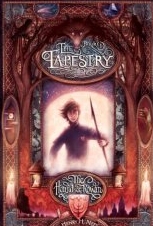
The Hound of Rowan


Hound of rowanI wrote a few weeks ago about The Next Harry Potter and whined a little about wanting to read a book that made me feel the way I felt the first time I read HP & the Sorcerer’s Stone. While Henry Neff’s Hound of Rowan isn’t exactly that, it sure comes close.

During an annual museum trip with his Dad, Max McDaniels discovers he has potential. But his “potential” is not your normal everyday kid potential. Nope. Max’s potential is magical, and a chance encounter with a golden threaded tapestry in the museum opens up a whole new world for the boy. Max eventually ends up at Rowan, an exclusive school for other Potentials, but not after being attacked by an odd little woman with hard, sparkly eyes. Once at school, Max discovers a number of pronounced talents — he can Amplify like nobody’s business (picture Superman’s quick trip around the Earth to turn back time when Lois dies on that highway in Superman: the Movie) and bears an odd similarity to Cuchulain, the Hound of Ulster from Irish mythology. As expected, a darkness is rising, and Max and his roommate David appear to be the duo that will save the world. Despite their efforts, however, the Darkness (in this case, Astaroth) does rise again, opening the door for more adventures.

The Hound of Rowan is awash in mythology, both modern and ancient, and Neff pays tribute to Those Who Have Gone Before. There are plenty of similarities to Harry Potter — the impetuous boy destined to save the world, the magic school, odd creatures, the village sweet shop — but there is a welcome and refreshing blending of imagery from other sources as varied as The Dark is Rising, Half Magic, The Mabinogion, Star Trek, Tron, and even Bedknobs and Broomsticks! I was particularly taken with the “Courses” students are required to master that use a concept similar to Star Trek: the next generation holodeck mashed up with the psychedelic bing-bing of Tron. The courses run “scenarios” that teach the students things like strategy and agility. And of course, the obligatory school sports game — not Quidditch but Euclidean Soccer — played remarkably like the soccer game on the Island of Naboomboo in Bedknobs & Broomsticks.

The copy I read was an advanced reading copy, and as expected there were a few things that needed to be fixed. I hope the final version provides a better characterization of David, Max’s roommate, as well as the backstory for Ronin (think Sirius Black). On the whole, however, Hound of Rowan is a total and complete romp, well worth your time, and highly recommended for grades 4 and up.

Children's

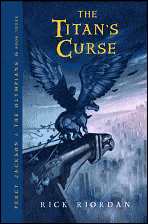
The Titan’s Curse


Titan’s CurseI’ve been a Percy Jackson fan since reading the first chapter of The Lightning Thief last summer, and Rick Riordan doesn’t disappoint with his latest. For those of you not familiar with Riordan’s series, Perseus “Percy” Jackson is a Son of Poseidon, a “hero” among men, who discovered his heritage in The Lightning Thief. In that story, its sequel Sea of Monsters, and now The Titan’s Curse, the gods of Olympus are alive and well, and living above Manhattan. Percy and other half bloods gather each summer at Camp Half Blood, where they learn how to be heroes. In The Lightning Thief, we discovered a traitor among the campers, Luke, whose mission in life is to restore the Titans to power. Remember your Greek mythology now — the Titans gave birth to the gods, who then destroyed their parents and claimed power over all the world. But Titans cannot die, they can only be rent into tiny shreds, which apparently can be out back together. And if the granddaddy of all titans gets put back together, it will be Really, Really Bad.

In Titan’s Curse, Percy heads off on a quest to rescue pal Annabeth, Daughter of Athena, who disappears during a mission in which we meet Artemis and her hunters. After regrouping at Camp Half Blood, Percy sneaks off on a quest to save Artemis and Annabeth with two of the hunters, satyr Grover, and Thalia, Daughter of Zeus. Monsters galore pursue them, from the Smithsonian Air & Space Museum to Hoover Dam to San Francisco, where they eventually find Annabeth and Artemis, who has been tricked into holding up the world for the titan Atlas. As expected, our heroes triumph and the world is saved once more.

As I wrote about the first two in this series, there are remarkable similarities to Harry Potter, but despite that this is one rip-roaring good story. The monsters and creatures are fabulous — the winged statues from Hoover Dam that break free and transport the heroes to San Francisco made me envision two big Oscars flying through the sky — and the characterizations of the gods are wonderful — who could resist an Apollo who spouts bad haiku and talks like a Surfer Dude? I pictured Jeff Spicoli every time. Riordan does a masterful job blending Greek mythology with the 21st century, and has created a core of entertaining characters who should keep the world safe for years to come. Highly recommended for grades 5 and up.

General

Would You Put This In Your House?


Just in case you haven’t seen this….

The Reading Cave — a bookshelf with a built-in reading nook. Not my style, but interesting nonetheless.

The CaveThe Cave

Mystery

The Bad Quarto


Cover ImageI was browsing a few weeks ago among the fabulous displays done by the Lit staff at the Central Library and happened across a familiar author writing in an unfamiliar genre. Jill Paton Walsh has been one of my top 10 favorite young adult authors ever since Ellin Chu made me read A Parcel of Patterns years ago. Imagine my surprise and delight when I fouund that she’s now writing mysteries for adults.

The Bad Quarto is the latest in her Imogen Quy (rhymes with “why”) series. Imogen is a nurse at St. Agatha’s College, Cambridge University, but moonlights as a part-time sleuth. Devoted mystery readers know that the Universities in England are awash with mystery and intrigue, and in the grand tradition of Dorothy Sayers, St. Agatha’s is no different. This time around, Imogen must unravel the mysterious death of a promising scholar, which becomes tied up with a production of Shakespeare’s “Bad Quarto” version of Hamlet, which which leads her to the daring “night climbers” of Cambridge, and finally to a sad and dangerous young woman.

Imogen is everything we want in a sleuth – single, self-possessed, empathetic, smart, funny, daring — a real Nancy Drew. She handles all the (many) characters throughout the story with aplomb. The story is short, a mere 265 pages, but Paton Walsh packs a lot into that small space — almost too much. There is an over abundance of characters here and I did have some trouble keeping them all straight at times. However, Paton Walsh ties up the ends into a neat little bow, leaving me wanting more of Imogen Quy. I will be looking for her earlier titles now, and waiting for the next in the series.

Children's

The Next Harry Potter


Here’s an interesting post about the next Harry Potter. Apparently, the editor who discovered Harry and gang has just discovered the next great thing to hit children’s literature — Tunnels, a series about a boy archaeologist who discovers a world of tunnels beneath London. H’mmmmm. Kiki Strike fans? Anything sound familiar?

Am I the only one getting tired of the “Next Harry Potter?” It seems to me that much of the children’s fantasy I’ve read lately is derivative of HP, which of course is derivative in and of itself. The boy hero fighting immeasurable evil supported by two stalwart friends? You children’s lit afficiandos out there should remember the “rule of three” from a multitude of folktales. If not, go find a copy of Best-Loved Folktales of World by Joanna Cole and read a few. You’ll see what I mean. I read Rick Riordan’s newest Percy Jackson book, The Titan’s Curse, last weekend and again was struck by how much the whole plot and character ensemble resembles HP. Of course, the mythology is slightly different but the basic ensemble is the same.

I remember first reading Harry Potter and the Sorceror’s Stone and loving it to pieces. It was something new and exciting and very, very special. I want to feel that way again about a children’s book. Don’t you?

General

48 Hour Book Challenge Results


No time to write full reviews right now, so here’s a quick-n-dirty lowdown on my weekend reading for the 48 Hour Book Challenge. Started at 4:00 pm Friday, ended 4:00 pm Sunday.

  1. Resurrection Men by T.K. Welsh – 214 pages
  2. The Titan’s Curse by Rick Riordan – 312 pages
  3. The Bad Quarto by Jill Paton Walsh – 245 pages
  4. Sacred Bones by Michael Byrnes – 293 pages
  5. The Devil in Amber byMark Gatiss – 245 pages
  6. The Hound of Rowan by Henry Neff – 414 pages

Total books read: 6
Total pages read: 1773
Books started but not finished: 1

General

48 Hour Reading List


Okay…

Here’s what’s in my pile of reading for the 48 Hour Reading Challenge.

  • Resurrection Men by T.K. Welsh
  • The Titan’s Curse by Rick Riordan
  • Sacred Bones by Michael Byrnes
  • The Bad Quarto by Jill Paton Walsh
  • The Devil in Amber by Mark Gatiss
  • The Alexandria Link by Steve Berry
  • The Hollow People by Brian Keaney
  • The Hound of Rowan by Henry Neff

I’ll be back on Sunday to report…Happy reading everyone!

General

48 Hour Book Challenge


MotherReader is hosting the second annual 48 Hour Book Challenge June 8-10, and all you readers out there should take this opportunity to do nothing all weekend except read! I threw my hat into the ring last year and spent a very enjoyable weekend getting a head-start on all my summer reading. Here’s my list from last year:

  • My Life in France by Julia Child with Alex Prudhomme – I love Julia even more after reading about her life in France. Boy, those snooty chefs at the Sorbonne must have *hated* her!
  • The Penderwicks by Jeanne Birdsall – Can anyone say “Bobbsey Twins?”
  • Men of Bronze by Scott Oden – an odd combination of war and sex in ancient Persia & Egypt.
  • A Great and Terrible Beauty by Libba Bray – Good but not great, bad, but not terrible.
  • When the Missisissippi Ran Backwards by Jay Feldman – interesting, and scary, history of the New Madrid fault and the great earthquake that changed the course of a war and a country.
  • Flavor of the Month: Why Smart People Fall for Fads – excellent treatment of how fads can affect our lives when they’re adopted by the medical, educating and business communities. TQM, the bane of my existence at library meetings during the span of 1998-about 2002 or 2003, is totally skewered.
  • Food Court Druids, Cherohonkees, and Other Creatures Unique to the Republic by Robert Lanham – totally hilarious. I think I have a touch of “Happy Monday” in me.

Not sure what I’ll be reading this year, except I know the new Percy Jackson/Rick Riordan book will be in that pile, and perhaps the newest Cotton Malone/Steve Berry thriller.

Children's

The Invention of Hugo Cabret


It’s not often a book comes along that blends elements of the novel, the picture book, and the graphic novel all in one…and it works. The Invention of Hugo Cabret by Brian Selznick is one of those books. The story of Hugo, an orphan who lives in the walls of the Paris train station, is told via a skillful combination of narrative and illustration that evoke the flip books of my youth.

Hugo, the orphaned son of a master horologist (clockmaker), is taken in by his uncle, the clock-keeper at the Paris train station, after his father perishes in a fire at the museum where he had been working on fixing an automaton. Hugo’s uncle, a horologist but also a drunk, shows him how to care for the clocks in the station. When his uncle fails to return from a night of drinking, Hugo becomes the keeper of the clocks, but also manages to resurrect the automaton project that his father was working on. Hugo becomes obsessed with getting the mechanical man to work, thinking that the automaton contains a secret message from his father. Through the course of his work on the automaton, Hugo becomes involved with a young girl and an old toymaker who is much more than what he seems. Together, they unravel the mystery of the mechanical man, resulting in a rich and wondrous foray into the world of early movie-making.

Selznick uses pages of illustrations to tell portions of the story without words. Chapters are interspersed with page upon page of wordless drawings, which work to convey an unexpected tension and sense of expectation that mere words would never accomplish in a novel such as this. The illustrations, done in rough charcoal sketches, shrink or expand according to the plot — a convention which reminded me very much of Zoom by Istvan Banyai. Reading this 800 page book in a day was effortless, and as I read, I wondered if there has ever been a book nominated for both a Caldecott and a Newbery in the same year. Perhaps 2007 is that year.

Thanks to Kathy Wolf of the Rochester Public Library’s Children’s Center for recommending this one!